
Article By Frank Bergman
As Canada prepares to begin euthanizing mentally ill citizens, a growing push from lawmakers, activists, and medical advocates is already seeking to dramatically expand the government-approved “assisted suicide” regime to include children.
Canada’s controversial euthanasia system is facing mounting backlash over the rapid expansion of the Liberal government’s “assisted suicide” program beyond terminal illness.
The program will be expanded next year to include mentally ill citizens and potentially even minors.
The country’s Medical Assistance in Dying (MAiD) program already kills tens of thousands of Canadians each year.
Critics warn the system, initially sold to the public as a compassionate option for the terminally ill, is quickly devolving into something far more dangerous.
Now, with Canada preparing to remove restrictions on euthanasia for people suffering solely from mental illness, opponents say the country is moving into deeply disturbing territory that was once considered unthinkable.
Canada Set to Open Assisted Suicide to Mentally Ill
Under current law, Canada’s temporary exclusion blocking euthanasia for people suffering only from mental illness is set to expire in 2027 unless further legal or political action is taken.
If that happens, Canadians suffering from depression, psychiatric illnesses, eating disorders, or other mental health conditions could be euthanized by the government, even if they are not terminally ill.
Critics say the move marks a radical escalation of the MAiD system.
Conservative lawmakers in Canada have been battling for a freeze on further expansion of the euthanasia regime, warning the country is crossing dangerous ethical lines.
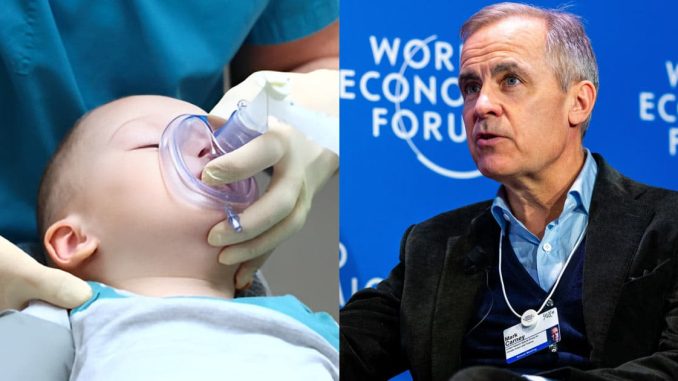
Prime Minister Mark Carney has reportedly declined to take a firm public position on the issue, saying he is still “waiting to take a position.”
Activists Also Pushing for Expansion to Children
Concerns are also growing over calls from some activists and medical figures to eventually extend assisted suicide eligibility to minors.
Reports and policy discussions have referenced euthanasia for infants suffering from severe disabilities, grave syndromes, or low survival prospects, often citing practices already used in the Netherlands.
Some advocates have reportedly argued for expanding eligibility to teenagers, including discussions about scenarios where parental consent may not be required.
The issue has sparked outrage among critics who say the system is steadily shifting away from end-of-life care and toward broader state-sanctioned death policies.
Critics Warn MAID Becoming Tool of Socialized Healthcare System
The expansion debate comes amid disturbing reports from elderly Canadians who claim they were offered euthanasia instead of medical treatment or long-term care support.
Opponents fear the system could increasingly be used as a cost-cutting mechanism inside Canada’s strained government-run healthcare system.
Critics warn that once governments become financially responsible for public healthcare, incentives can emerge to reduce expensive long-term patients rather than provide treatment.
Canada’s MAiD system has already become one of the most expansive euthanasia programs in the world.
While advocates continue framing the policy as compassionate healthcare, critics argue the country is normalizing assisted death for increasingly broad categories of vulnerable people.
Canada Viewed as Global Test Case
International observers note that many Western governments are closely watching Canada’s model.
The Netherlands remains one of the only countries with a similarly integrated euthanasia framework.
However, critics say Canada has become the primary testing ground for broad state-managed assisted suicide systems.
Only Alberta has emerged as a major provincial government openly pushing back against further MAiD expansion.
Meanwhile, global critics warn that Canada’s trajectory demonstrates how assisted suicide laws often expand far beyond their original promises.
Programs initially introduced for terminally ill adults in severe pain can gradually evolve to include people suffering from mental illness, disabilities, chronic conditions, or emotional distress.
Slippery Slope Concerns Intensify
Opponents say Canada’s euthanasia expansion confirms longstanding warnings that assisted suicide programs rarely remain narrowly limited once legalized.
What began as a policy framed around compassion for the dying is now moving toward state-approved death for people struggling with mental health, depression, and potentially even children.
Critics argue the broader danger lies in normalizing the idea that suffering, hardship, disability, or emotional pain are reasons for the government to facilitate death instead of offering treatment, support, or hope.
As Canada edges closer to expanding MAiD eligibility even further, growing numbers of physicians, lawmakers, religious leaders, and civil liberties advocates are warning that the country may be entering morally and socially dangerous territory with consequences that could spread far beyond its borders.















Be the first to comment