
Article By Michael Gryboski
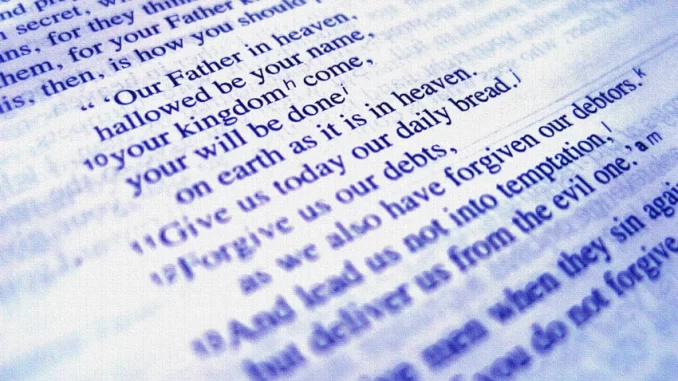
A county government in Maryland has announced that it will quit reciting the Lord’s Prayer at the start of meetings following a complaint from an atheist legal group.
The Wicomico County Council decided last week to discontinue its practice of having a biblical invocation, citing concerns about the potential for expensive litigation.
“This decision was made by Council President John T. Cannon after receiving legal guidance indicating that the United States District Court for Maryland and the U.S. Court of Appeals for the Fourth Circuit have ruled against council-led sectarian prayer,” stated county officials, according to CBS News affiliate WBOC.
“Legal counsel advised that any challenge to this precedent would likely require litigation through the U.S. Supreme Court level, with no reasonable expectation of success in the Maryland courts or Fourth Circuit.”
The Christian Post reached out to the Wicomico County Council for this report, however a response wasn’t provided by press time.
For her part, County Executive Julie Giordano denounced the decision, lamenting in a social post quoted by WBOC that local officials “bent the knee for one person at the expense of 104,000 people.”
“I don’t think we would’ve been sued,” Giordano added. “We’ve looked at the legal ramification of having the Lord’s Prayer at the beginning. It would definitely be an issue if we were forcing people to say the Lord’s Prayer, but you have the choice.”
For months, Wicomico County Council President John T. Cannon would recite the Lord’s Prayer at the start of official meetings, with the Pledge of Allegiance being performed afterward.
Last October, the Wisconsin-based Freedom From Religion Foundation sent a complaint letter to Cannon, noting that a “concerned community member” had informed them of the practice.
An additional concern was regarding a meeting in September 2025 in which a county councilmember read from the Bible and then implored attendees to become Christian.
“Prayer and proselytizing at government meetings is unnecessary, inappropriate, and divisive,” wrote Charlotte R. Gude, legal fellow with the FFRF, in the complaint letter.
“Council members are free to pray privately or to worship on their own time in their own way. They do not need to worship on taxpayers’ time.”
On New Year’s Eve, Cannon wrote back to Gude explaining that “the Wicomico County Council has determined that beginning in calendar year 2026, it will discontinue the recitation of the Lord’s Prayer as part of the Council’s meeting agenda.”
In 2014, the U.S. Supreme Court ruled 5-4 in Town of Greece v. Galloway that a town in New York could have explicitly Christian prayers before the start of their official meetings.
However, the 2014 decision was focused on whether invited clergy could give such invocations and did not address whether it was constitutional for elected officials to do the same.





Be the first to comment