
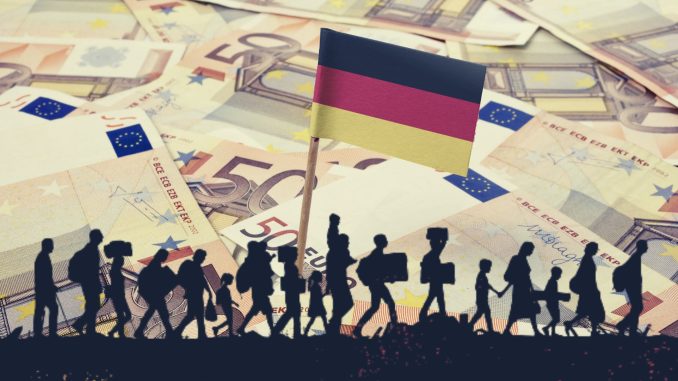
Germany’s migrant population is surging, with new data from the Federal Statistical Office (Destatis) revealing that more than one in four people now living in the country has a migration background.
In 2024, the number of residents with an immigration background rose by 4 percent, or 873,000 people, compared to the previous year, reaching a record 21.2 million. This represents 25.6 percent of the total population, up from 24.7 percent in 2023.
The term “migration background” includes both those who have immigrated themselves (first-generation migrants) and those born in Germany to two immigrant parents (second-generation). Nearly 16.1 million people — 19.4 percent of the population — were immigrants themselves, while an additional 5.2 million, or 6.3 percent, were born in Germany to two foreign-born parents.
In contrast, the native-born population without any migration history fell by 1 percent (734,000 people) to 57.4 million, now comprising 69.3 percent of the country.
The youth of Germany’s migrant population stands out. Among people aged 20 to 39, more than one in three (34 percent) had a migration background in 2024. Among those over 65, that figure drops to 14 percent. The average age of someone with a migration background is 38.2 years, nearly a decade younger than those without one, who average 47.4 years. Those with only one immigrant parent had the youngest average age of all groups at 25.1.
Migration since 2015 has played a major role in these shifts, with nearly 6.5 million people living in Germany in 2024 immigrating after 2015.
Between 2015 and 2021, the largest groups came from Syria (716,000), Romania (300,000), and Poland (230,000). From 2022 to 2024, Ukraine dominated the figures, with 843,000 arrivals, followed by Syria (124,000) and Turkey (112,000).
The main reasons cited for migrating to Germany since 2015 were to seek asylum (31 percent), employment (23 percent), and family reunification (21 percent). Among women, family reunification was especially significant, cited by 26 percent alongside 30 percent who cited flight. Among men, 32 percent cited flight and 28 percent employment.
The new figures confirm that Germany’s migrant population is growing rapidly, leading to demographic pressures and concerns over integration.
Furthermore, the common claim among left-wing politicians that migration is fuelling Germany’s workforce does not stand up to scrutiny, with fewer than a quarter of newcomers citing employment as their reason for the move.





Be the first to comment