
Original Article By Christian Daily International
Persecution of Christians worldwide has increased significantly in both quantity and intensity, human rights experts in Berlin, Germany, said on Wednesday.
Thomas Schirrmacher, president of the International Society for Human Rights (ISHR), said at a press conference announcing the release of the ISHR 2025 yearbooks “Religious Freedom” and “Persecution and Discrimination of Christians” that the situation of Christians in many regions has deteriorated significantly across the globe.
“This takes the form not only of direct violence (murders, kidnappings), but also of legislation, social discrimination, restrictions in public and private life and control of churches and religious services,” Schirrmacher said at the German Evangelical Alliance/Evangelische Allianz offices in Berlin. “The rise of authoritarian regimes, religious nationalism, political instability and violent conflicts is increasing the pressure of persecution.”
Schirrmacher, founder and co-editor of the yearbooks and former secretary general of the World Evangelical Alliance, said they evaluate contemporary threats to freedom rights, including state persecution, extremist violence, imperialist dominance and anti-religious discrimination.
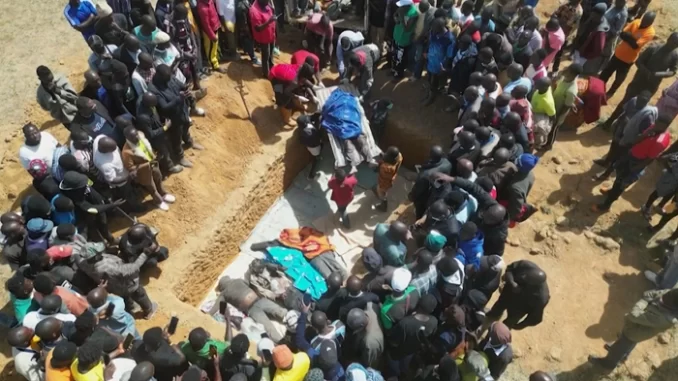
Religious freedom is a fundamental human right, but threats against it are increasing worldwide, said Schirrmacher, who just returned from meeting religious minorities in Syria and Iraqi Kurdistan. Highlighting two case studies from the new yearbook, he noted that Islamist groups in Nigeria — such as Boko Haram, Islamic State West Africa Province (ISWAP) and Fulani herdsmen militias — continually target Christian communities.
Terrorist attacks, kidnappings, murders and the destruction of church facilities occur regularly, affecting not only individuals but forcing entire communities to live in fear and uncertainty.
Expected to be the third-largest Christian country in the world by 2050, Nigeria has needs that remain enormous, as it requires more emergency doctors, early warning systems and evacuation measures to prevent further massacres.
The situation in Pakistan is also worrying, he said, as Christians regularly suffer under discriminatory blasphemy laws. The mere accusation of blasphemy can socially ostracize people, expose them to violent attacks or bring them to court. In addition, abductions, forced conversions to Islam and child marriages particularly affect girls from religious minorities, mostly Hindus or Christians.
Despite laws to combat such abuses, implementation remains weak. While some courts show progress in protecting minors, discrimination continues. International pressure from the European Union and others has brought cautious signs of improvement, but the situation remains serious, Schirrmacher said.
“These and numerous other cases the yearbook covers show that the situation for Christians is precarious in many regions,” he said. “As publishers of the Yearbooks on Persecution and Discrimination of Christians, we call on politicians and civil society — also on behalf of our authors and supporters — to defend religious freedom resolutely and not to remain silent about the fate of persecuted Christians.”
Schirrmacher emphasized that politicians must consistently defend religious freedom as a fundamental human right and not treat it as a marginal political issue. He added that history has shown time and again that where freedom of belief ends, the erosion of other fundamental freedom rights begins.
“People of various religions and beliefs suffer defamation, discrimination, and persecution because of their faith,” he said in a statement. “We want to contribute to putting a stop to the enemies of freedom of belief and conscience.”
Two factors are the root causes of global persecution of Christians, he said. First, dictatorial, one-party states like China, Cuba and North Korea view Christians as a threat and therefore strictly monitor and oppress them. Second, militant political-religious movements or groups victimize Christians.
“They suffer discrimination in professional and social life, violent attacks, kidnappings, expulsions and abuse,” he said. “They remain victims without effective state protection because there is no rule of law.”
Schirrmacher noted that Christians in Egypt, Syria, Nigeria, India and Myanmar suffer particularly under such conditions. He cited other states such as the Islamic republics of Afghanistan, Iran and Pakistan that have “tied their social order to a religion in a totalitarian manner and ruthlessly enforce their religious-political coercive order with state resources.”
“In all these states, Christians suffer, and with them other religious communities,” he said. “We must not be indifferent to this! For our commitment to the victims can only be credible and ultimately successful if we do not focus solely on one group of victims while ignoring others. At the same time, we must analyze and publicize the motives of the oppressors. The enemies of freedom of belief and conscience fear this most, and it can put a stop to their activities.”
Germany’s Federal Government Commissioner for Freedom of Religion and Belief Thomas Rachel, a member of the German Bundestag, pointed out that advocating for freedom of religion and belief is an important part of the government’s human rights policy.
“Furthermore, respect for freedom of religion and belief is an important contribution to strengthening peace and stability in the world,” Rachel said in a press statement. “When governments disregard this freedom, conflict and violence can arise. This is another reason why dialogue with and between religious communities is so important. When international politics gives greater consideration to religion, this can often be an opportunity for peace.”
Johann Matthies, political representative of Evangelische Allianz Deutschland, highlighted the plight of Ukrainian Christians. He noted their crucial role in forming national identity and fostering religious pluralism — stark contrast to Russia, where the Kremlin “abuses the Russian Orthodox Church as a political tool.”
Matthies condemned the systematic persecution of independent religious communities, particularly Evangelical free churches, by Russian authorities since the 2014 occupation of Crimea and Donbas. He warned that this repression has escalated in newly occupied territories.
“By mid-2023, Russian authorities had closed almost all independent religious communities in the Zaporizhzhia and Kherson regions,” he stated.
Authorities destroy buildings of churches that refuse to cooperate or force them to submit to the Russian Orthodox Church, Matthies added.




Be the first to comment