
Article By Frank Bergman
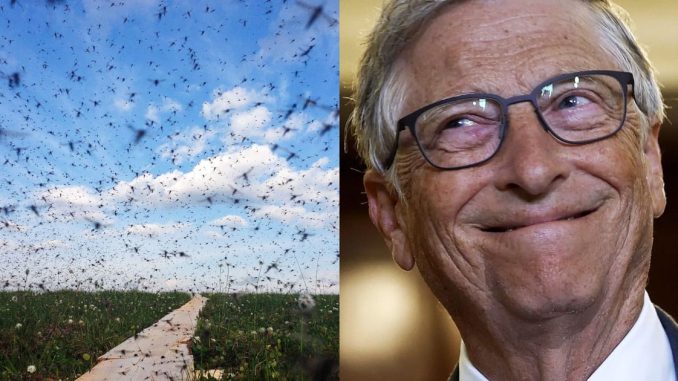
A growing number of experts are raising the alarm over billionaire Bill Gates’s extensive involvement in genetically modified mosquito projects after it emerged that the Microsoft co-founder has released hundreds of millions of bacteria-infested mosquitoes into the wild in Colombia.
The revelation is drawing renewed scrutiny to Gates’s other mosquito-based biological interventions around the world, with scientists warning that the long-term consequences remain largely unknown.
The concerns intensified after the government of Burkina Faso terminated the controversial Target Malaria project last year, citing biosafety risks, questionable effectiveness, and concerns over scientific sovereignty.
The project had received significant funding from the Gates Foundation and Open Philanthropy and allegedly sought to use genetically modified mosquitoes as a tool to combat malaria.
The decision marked a major setback for one of the world’s most ambitious genetic engineering programs involving insect populations.
Burkina Faso Pulls Plug on Gates-Backed Mosquito Project
Target Malaria launched operations in Burkina Faso in 2012 as part of a broader international effort to deploy gene-editing technologies against malaria-carrying mosquitoes.
In August 2025, Burkina Faso’s government ordered an immediate halt to all project activities and directed that remaining mosquito samples be destroyed.
Officials cited public health concerns, environmental risks, and a desire to maintain national control over scientific research conducted within the country.
Target Malaria’s work focused on genetically altering mosquito populations, including the development of so-called “gene drives” designed to spread engineered traits through wild mosquito populations.
Critics have warned that once released into the environment, such modifications could be impossible to reverse.
The Gates Foundation has invested tens of millions of dollars into the initiative, including grants supporting research facilities and field trials across multiple African nations.
Global Network of Mosquito Experiments Expands
Target Malaria is only one part of a much broader network of Gates-funded mosquito projects.
The Foundation has also funded research involving Oxitec, a biotechnology company known for releasing genetically modified mosquitoes in various regions around the world.
According to reports, Gates-backed initiatives have targeted mosquito species associated with diseases such as malaria, dengue fever, Zika virus, yellow fever, and chikungunya.
In addition, the Gates Foundation has supported efforts involving mosquitoes carrying Wolbachia bacteria, a strategy promoted through the Australia-based World Mosquito Programme.
Rather than genetically modifying the mosquitoes themselves, these programs breed mosquitoes carrying the bacteria and release them into the wild with the goal of spreading the organism through local mosquito populations.
Millions of Modified Mosquitoes Released Every Week
One of the largest ongoing projects is located in Colombia.
According to reports, approximately 30 million Wolbachia-infected mosquitoes are being released every single week as part of a large-scale program supported by the Gates Foundation and the World Mosquito Programme.
The initiative began years ago and has expanded significantly, with supporters claiming the bacteria can reduce transmission of diseases such as dengue fever.
Critics, however, argue that the public is effectively participating in a biological experiment without meaningful informed consent and that the long-term ecological consequences remain uncertain.
Questions Raised Over Dual-Use Biological Research
The controversy extends beyond mosquito control itself.
For years, scientists and academics have been discussing the risks associated with dual-use biological technologies.
This type of scientific research may have legitimate public-health applications, but it could also be misused for harmful purposes.
Various mosquito-borne diseases targeted by these projects, including dengue, yellow fever, chikungunya, and Zika, have been identified in biodefense and biosecurity discussions as pathogens of concern.
Critics argue that the increasing ability to genetically manipulate organisms raises important questions about oversight, transparency, and potential unintended consequences.
Critics Demand Greater Transparency
As governments, universities, private foundations, and biotechnology firms continue expanding mosquito-based intervention programs across multiple continents, critics are calling for far greater public scrutiny.
They argue that projects involving genetic modification, biological manipulation, and large-scale environmental releases should be subject to extensive public debate rather than being driven primarily by unelected global institutions and billionaire-funded organizations.
With millions of modified or bacteria-carrying mosquitoes already being released into communities around the world, opponents warn that society may not fully understand the consequences until years after the experiments have already reshaped natural ecosystems.















Be the first to comment