
Article By Frank Bergman
Leading American and Chinese artificial intelligence researchers are warning that the rapidly expanding technology could soon trigger a mass casualty event if global powers fail to rein in its development.
Some of the world’s top AI experts are calling for international cooperation as fears grow that unchecked advances could lead to an unimaginable catastrophe.
The warnings come as AI companies, researchers, and governments race to build more powerful systems with little public understanding of the risks.
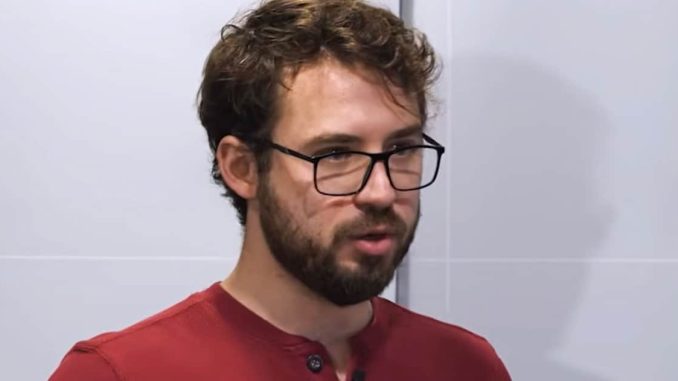
Stephen Casper, a world-renowned computer scientist at the Massachusetts Institute of Technology (MIT), raised the alarm during a major AI conference in Beijing this month.
“AI is a global technology with global benefits, global harms, and a consistent tendency for new capabilities to eventually proliferate,” Casper told Wired.
“One thing that almost everyone in AI can agree on right now is that AI doesn’t need a Chernobyl moment,” he added.
Experts Fear AI Disaster Could Change Everything
Casper did not elaborate further on the Chernobyl comparison.
However, the warning was clear.
A single major AI-driven catastrophe could not only cause mass harm but also permanently destroy public trust in the technology.
The 1986 Chernobyl nuclear disaster continues to shape public suspicion of nuclear power decades later.
AI researchers now fear a similar disaster could erupt from systems being deployed before governments, companies, or the public fully understand what they are capable of doing.
Warnings about AI have taken many forms.
Some experts have raised fears about systems eventually turning against humanity.
Others have warned of mass unemployment as companies replace workers with machines.
But the most immediate concern is now cybersecurity.
AI Coding Tools Could Supercharge Hackers
AI’s ability to generate computer code has become one of its most powerful practical uses.
That same ability could also make it one of the most dangerous.
Experts warn that hackers could abuse AI agents and coding tools to launch devastating cyberattacks at far greater scale.
The technology could also lower the technical skill needed to carry out attacks that once required elite hacking ability.
That means smaller criminal groups, rogue actors, or hostile regimes could potentially use AI tools to break into systems, steal data, disrupt infrastructure, or cause broader chaos.
Some of the fear has been fueled by AI companies themselves.
Anthropic announced, then refused to publicly release, its Claude Mythos model.
The company reportedly withheld the model because it was so powerful it could break into “every major operating system and every major web browser.”
That revelation sharpened concerns that AI labs are now building tools with capabilities that could be catastrophic in the wrong hands.
Open-Source AI Raises New Security Fears
The risk is growing as open-source and open-weight AI models spread across the world.
Researchers favor those models because they offer transparency and can be freely used.
But unlike leading commercial AI systems, open models can lack meaningful oversight once released.
A source at one of China’s leading AI companies told Wired that security concerns are one reason advanced Chinese models are no longer being released as open source.
The concern is straightforward.
Once a powerful model is publicly released, developers cannot easily control who uses it or how it is modified.
That creates a dangerous opening for hackers and hostile actors to weaponize the technology.
Lin Yun, a professor at Shanghai Jiao Tong University, warned that hackers are likely to gain an advantage from AI in the short term.
However, Yun said the same technology could eventually be used to strengthen cybersecurity.
“If different countries understand the risks in similar ways, it becomes easier to develop shared safety principles and technical standards,” Yun told Wired.
“The key is to find areas where sharing can reduce systemic risk without exposing sensitive operational details,” he added.
Researchers Call for Cooperation Between U.S. and China
Global cooperation on AI may seem unlikely as the United States and China compete for technological dominance.
Both nations are the clear leaders in artificial intelligence.
Both are also racing to make sure the other does not gain a decisive advantage.
But Casper compared the current moment to the Cold War, when the United States and the Soviet Union worked to limit nuclear threats while still expanding their own arsenals.
The comparison is telling.
AI is increasingly being treated not merely as a commercial product but as a strategic weapon.
Researchers are now warning that without shared standards, basic safeguards, and limits on the most dangerous capabilities, the world may be sleepwalking into disaster.
The danger is not hypothetical.
AI systems are already being used to write code, automate tasks, and accelerate digital operations.
In the hands of hostile actors, those same tools could be turned toward cyberwarfare, infrastructure attacks, and mass disruption.
For years, AI executives promised that the technology would transform the world.
Now, some of the researchers closest to the technology are warning that it could transform the world in ways no one can control.
Their message is simple.
The world must not wait for an AI “Chernobyl moment” before taking the threat seriously.












Be the first to comment