

Original Article By Hailey Gomez & Andi Shae Napier
California is known for pushing hundreds of bills through its Legislature each year, but many residents don’t realize what Democratic leaders have approved until the laws take effect.
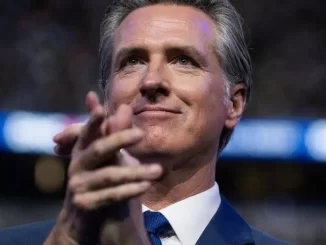
In the 2025 state legislative session, lawmakers sent 917 bills to Democrat California Gov. Gavin Newsom, who signed 794 of them. Though it’s not Newsom’s highest total, as he signed 997 in 2022, several of this year’s laws are expected to reshape policy once they roll out in 2026 and after, potentially influencing other Democrat-led states.
1. Fast-Track Caregiver Designations — AB 495
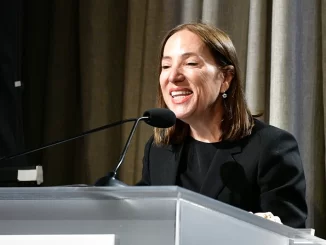
Newsom signed AB 495, the Family Preparedness Plan Act, by Assemblymember Celeste Rodriguez. The law creates a simplified, one-page affidavit allowing parents to designate a short-term caregiver, including nonrelatives, if they’re detained or deported by U.S. Immigration and Customs Enforcement (ICE). The bill notably applies broadly, not just to children of illegal immigrants.
Rodriguez told the Daily Caller News Foundation in August the measure educates “childcare providers to prepare for ICE raids” and strengthens tools for families to maintain care arrangements during detention, deportation or hospitalization.
While Newsom’s office says the act doesn’t change who can legally become a guardian without a court order, critics argue the affidavit is too easy to misuse. According to paperwork, the affidavit requires only basic child information, a checked box confirming parent notification attempts and an ID such as a driver’s license, state ID or consular card. Republican lawmakers warned it could create “unintended consequences for sex traffickers [who] could easily exploit” its gaps.
2. California’s Glock Ban — AB 1127
Despite Glocks being among the most popular handguns sold in the state, Newsom signed AB 1127, effectively blocking Californians from buying new Glock-style pistols.
Assemblymember Jesse Gabriel and other Democrats argued the measure forces Glock to redesign certain models so they can’t be easily modified with a small plastic device known as a “Glock switch,” which can convert the firearm into a fully automatic weapon. The state says the bill targets the modification issue, not the brand.

Cars ride the 110 Freeway toward downtown during heavy rain in Los Angeles, California. (Photo by APU GOMES/AFP via Getty Images)
Republicans countered that the attempt to curb illegal “switches” ends up disproportionately punishing lawful buyers, restricting access to one of the most widely used handgun platforms in the country. A gun-store owner told CBS News in October that Glock already produces newer models with built-in protections against switches, but the attorney general hasn’t approved them for sale in California, leaving buyers with no path forward.
3. ICE Alerts In Schools — SB 98
Another law hitting schools in 2026 is SB 98, drafted by Democratic state Sen. Lena González Pérez.
The measure requires K-12 schools and colleges to send out alerts anytime ICE is confirmed on campus. This will include when it happened, where it happened and links to “know your rights” resources. Every district will now have to build these procedures into its school-safety plan by March 2026.
Supporters say it’s meant to keep families from being blindsided, but critics argue it drags schools deeper into immigration politics and could stir up more fear than clarity. It’s a big shift in how districts communicate about law enforcement activity on campus.
4. Building A Reparations Eligibility System — SB 437
Despite Newsom vetoing a handful of measures and efforts to push reparations in California, the governor did end up approving Senate Bill 437, a quiet but sweeping change. The measure will directs the California State University system to develop a formal process for verifying whether someone is a descendant of enslaved African Americans. The state plans to give CSU up to $6 million to build out the research, standards and documentation needed to prove lineage, everything from genealogical tracing to how records should be evaluated when documentation is incomplete.
The law is part of California’s broader reparative-justice framework, and it essentially puts CSU in charge of creating the state’s “proof of ancestry” system. Beginning in the 2026–27 academic year, universities must start designing the methodology and reporting their progress back to the Legislature and the governor. Full implementation is expected by the 2029–30 school year, long before any future reparations program could be launched.
Supporters say SB 437 gives California a credible way to determine eligibility for possible reparations benefits. Critics, however, see it as an expensive and highly political mandate for a university system already struggling with enrollment, staffing and budget pressures. Either way, it marks one of the most concrete steps the state has taken toward building the infrastructure for a potential reparations program.
5. Seat-Belt Fit Test for Teens — AB 435
AB 435, introduced by Assemblywoman Lori Wilson, began as an effort to keep smaller teens out of the front seat and in booster seats. After internal Democratic pushback, the bill was rewritten to update how police assess whether a child can safely use a seat belt.
California already requires booster seats until age 8 or until a child reaches 4 feet 9 inches. Under the new adjustment of police standards, kids ages 8 to 16 will need to pass a five-step seat-belt fit test like checking posture, knee bend, shoulder belt placement, lap belt position and whether the child can stay seated correctly for the entire ride.
If the child fails the test and doesn’t meet the state requirement, drivers face a $490 fine and a ticket.
Democratic California Gov. Gavin Newsom ran for governor in 2018 on meeting the Golden State’s dire need for more affordable housing — but after nearly seven full years of his leadership, the state is still in a housing crisis.
Newsom pledged to create 3.5 million new housing units by 2025, but has drastically underperformed this goal, with production continuing to stall even after his administration lowered their target. Although Newsom has made clear his desire to ease the housing crunch, Californians continue to face low rates for housing permits, skyrocketing costs and one of the lowest home ownership rates in the nation.
❌AB 130 is a direct attack on the American Dream. It adds a housing tax that punishes Californians based on where they live — killing jobs, stalling housing, and driving up costs.
— Senator Tony Strickland (@SenStricklandCA) September 8, 2025
We must stop it before it’s too late. 🔗 in bio for statement. #caleg #CADeservesBetter pic.twitter.com/3AgRzmIWmm



Be the first to comment