
Article By Abdollah Fathi-Nejad
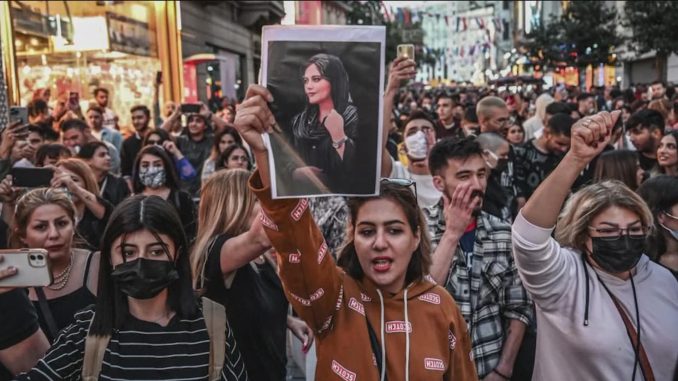
n September 2022, the death of 22-year-old Mahsa Amini in the custody of Iran’s morality police ignited a fire that still burns.
Her arrest for “improper hijab” sparked the historic Woman, Life, Freedom movement, drawing women and men into the streets to demand an end to compulsory veiling and gender apartheid.
For many outside Iran, this seemed like a sudden eruption. But it was the continuation of a struggle that began long before 2022—and long before 1979.
Iran’s state-supported march toward women’s equality began in the early 20th century under Reza Shah, who ruled from 1925 to 1941 and believed modernization required women’s active participation in public life.
His 1936 decree compelling women to unveil—though heavy-handed—was a watershed moment, symbolizing women’s entry into civic life after centuries of seclusion.
Under the Pahlavi shahs, especially Mohammad Reza Shah, who ruled from 1941 to 1979, this state-led transformation expanded into education, political participation, family law and the workplace.
Modern schools for girls expanded dramatically, and by the late 1970s women made up a growing share of university students, entering specialized fields from medicine to engineering.
In 1963, Iranian women won the right to vote and run for office. Within a decade, women held seats in parliament, served as cabinet ministers and worked as judges. The Family Protection Laws of 1967, expanded significantly in 1975, curbed polygamy, raised the minimum marriage age and substantially expanded women’s rights in divorce and child custody.
By the late 1970s, women were increasingly visible as doctors, lawyers, executives, pilots and business leaders.
Together, these advances transformed the legal and social position of Iranian women and brought greater equality within reach.
That progressive trajectory ended abruptly in 1979. While Ayatollah Khomeini cloaked his takeover in the language of prosperity and liberation, he delivered a theocratic counter-revolution.
The Family Protection Laws were dismantled, female judges were removed from the bench, the minimum marriage age for girls was lowered, and compulsory veiling was progressively imposed.
Iranian women resisted almost immediately. In March 1979, thousands marched through the streets of Tehran against compulsory veiling. Yet the West, eager to believe Khomeini’s moderate diplomatic promises, looked away as women’s hard-won gains were rapidly erased.
The consequences of that original betrayal continue to shape Iran, though the Islamic Republic’s methods have changed dramatically. In recent years, state security networks have intensified enforcement through measures including the Noor Plan, which stepped up enforcement of compulsory hijab.
Street-level coercion has increasingly been supplemented by technology and punitive restrictions. Authorities have used surveillance cameras, heavy financial penalties and other restrictions against women who defy compulsory veiling.
Yet this expanding apparatus has failed to break the population’s resolve. The civil defiance that followed Mahsa Amini’s death helped lay the groundwork for subsequent protests that again shook the Islamic Republic.
As an immigration consultant in Canada, I speak to many Iranians seeking to leave Iran. Again and again, they tell me the same story: they want a future where their daughters can study freely, choose their own paths and live without fear.
The history of Iranian women’s struggle also carries a lesson for the outside world. In 1979, Western leaders mistook a theocratic revolution for a movement that would deliver greater political freedom. Today, the West risks repeating its mistakes if it prioritizes short-term “stability” or narrow regional de-escalation agreements over fundamental human rights.
Supporting Iranian women is not a matter of international charity. It is also a strategic question. A secular, free Iran could fundamentally reshape the political and security landscape of the Middle East, reducing the forces that have fuelled proxy warfare and threatened vital maritime routes.












Be the first to comment