
Article By Wesley Smith
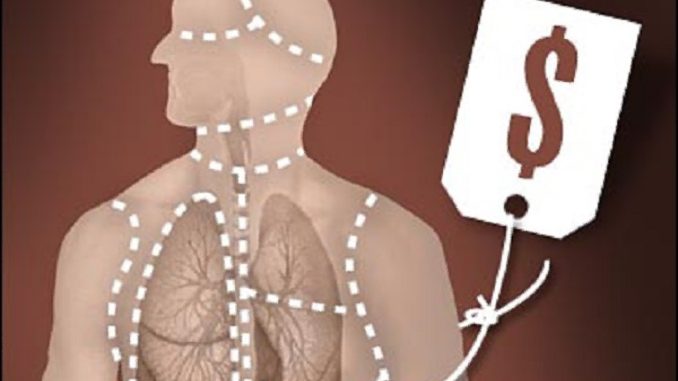
The legalization of assisted suicide/euthanasia corrupts medical ethics and not just because killing patients or assisting their suicides is a direct violation of the Hippocratic oath. No: Transforming sick and disabled people into a killable caste also objectifies them as potential natural resources to be mined or harvested.
Hastened death and organ-harvesting have already been conjoined in Canada, Australia, New Zealand, Spain, the Netherlands, and Belgium. (In the latter two countries, some cases have involved mentally ill patients.) The practice has been supported in prominent medical journals. It is not alarmism to note that the idea is gaining ever wider acceptance among the medical and bioethics intelligentsia.
But killing and then harvesting doesn’t go far enough for some mainstream bioethicists. Where euthanasia is legal, they don’t see why organ procurement can’t also be the means of death for patients who want to donate. In other words, don’t just kill and then harvest; harvest to kill.
Oh, Wesley! That would never be allowed!
No? The proposal was just pushed with all due respect in the world’s most influential medical journal, the New England Journal of Medicine, written by three prominent bioethicist-physicians (two of whom are from Harvard: all bow).
First, the authors correctly note that the “dead donor rule” — the prime ethical directive in organ transplant medicine — requires that vital organ donors to be dead before organ retrieval (let’s not get into the brain death controversy here). Moreover, it forbids organ procurement from being the cause of death.
But with the increasing legalization of euthanasia, the bioethicists urge a dramatic loosening of that foundational legal requirement. Where lethal jabs — death by homicide — are legal, they want the organ-harvesting itself to be the cause of death, what they call “death by organ donation.” From “Contextualizing the Dead Donor Rule in an Era of Voluntary Euthanasia“:
Voluntary euthanasia relies on this lawful waiver of the right to life under defined safeguards. This reasoning extends to organ donation after euthanasia, in which a patient knowingly consents to a death that will be followed by organ procurement. Organ donation after euthanasia creates a rare opportunity to honor end-of-life autonomy, since patients can articulate their own goals, including how their death might serve others.
Notice that they don’t call for suicide prevention. Once people can be lawfully killed, treating them as so many organ farms follows logically. But what to do about that pesky dead donor rule? Killing for organs may violate it, the authors admit, but it is within the spirit of righteous ethics, so loosening the rule can be “contextualized”:
In the context of voluntary euthanasia, in which patients provide first-person consent, trust doesn’t need to rest entirely on temporal sequencing. Voluntary euthanasia’s aim of relieving suffering with a humane end-of-life process aligns with the DDR’s concern for minimizing harm. When properly safeguarded, death by organ donation violates the Death Requirement without necessarily violating its underlying spirit of trust preservation and protecting patients from harm.
Baloney. Killing for organs can quickly become the primary reason for granting someone’s request to die “as a plum to society” (as I predicted back in 1993). Knowledge of that option can also be a material influence on whether and when a despairing person asks for euthanasia.
For example, a 16-year-old Belgian girl with brain cancer asked to be killed in part so that her organs could be harvested. She was put into a 36-hour coma — not for her medical benefit but to conduct needed tissue tests and find suitable recipients. The bioethicists claim that respect for patient autonomy should permit killing for organs:
Although death by organ donation may be viewed as a departure from the DDR, shifting focus away from the temporal relationship to death determination, we interpret it as consistent with a historical pattern of recontextualization. In the setting of regulated voluntary euthanasia and organ donation after euthanasia, death by organ donation warrants open, transparent dialogue. Since patients requesting voluntary euthanasia can provide first-person consent and articulate their values, that option might offer a unique opportunity to respect their autonomous wishes by integrating donation into their end-of-life planning.
Well, why should that rationalization not apply also to any suicidal person? After all, if someone really wants to die, who are we to interfere with his or her “autonomous wishes” by setting parameters on what kind of suffering qualifies for death by organ donation? Besides, killing for organs would result in a better product:
Death by organ donation would enable cardiac donation, typically prohibited with DCD, and improve recipient outcomes by reducing warm ischemia time, thereby lowering primary graft-dysfunction rates to levels similar to those achieved with donation after brain death. In addition, it might substantially increase the donor pool, potentially saving many lives. Since death would be a chosen and inevitable outcome in these cases, enabling retrieval under ideal conditions represents a Pareto improvement: no one would be made worse off, and multiple lives might be saved.
The morality of our society would be much worse off. And so would the patients, because they would become objectified once consent was granted, even if the desire to donate is the reason for their request.
How respectable is this kill-to-harvest proposal becoming? It has been proposed before without much objection. It doesn’t get more prestigious than the NEJM. And it is now sufficiently mainstream for NPR to have featured one of the latest proposal’s authors, Dr. Robert D. Truog, in a respectful interview.
We live in very disturbing times.












Be the first to comment