
Article By Frank Bergman
Canadian authorities are escalating efforts to police speech on social media as the federal government expands its definition of “hate,” “violence,” and “extremism.”
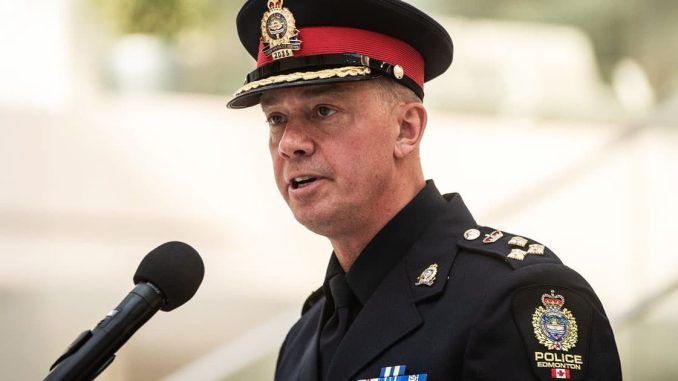
The latest warning came from Edmonton Police, which urged citizens to report allegedly “hateful” online comments in a post that was quickly deleted following public backlash.
“You typed it. Someone lived it,” the police message stated.
“Online hate isn’t ‘just a comment.’
“It hurts real people and harms real communities.
“Hate has no home here.”
The post included a video presenting examples of comments that police suggested should be reported.
However, lawmakers and legal commentators warned that many of the examples appeared offensive rather than criminal, exposing how easily hate-speech enforcement can be used to intimidate Canadians into silence.
Police Delete ‘Report Online Hate’ Campaign After Backlash
The Edmonton Police post directed users to a page where they could report social media content to authorities.
The department deleted the campaign after it triggered immediate criticism.
Conservative MP Andrew Lawton said some of the examples shown in the video could potentially cross the legal line by advocating violence.
However, he warned that most appeared to fall short of Canada’s criminal standard for hate speech.
“Some of these posts call for violence and could meet criminal threshold, but I struggle to see how most of these sample hate posts would be illegal (which is different from offensive, hurtful, uncivil, etc.),” Lawton wrote.
“This is precisely the chilling effect I warned about with Bill C-9.”
Bill C-9, the Liberal government’s Combatting Hate Act, dramatically expanded Canada’s hate-speech regime while removing safeguards that previously constrained prosecutions.
Former Harper Aide: ‘This Is Outrageous’
Howard Anglin, a commentator and former deputy chief of staff to Prime Minister Stephen Harper, also condemned the police campaign.
“This is outrageous,” Anglin wrote.
“None of the comments I can see, as offensive as they may be, meets the standard for hate speech set out by the Supreme Court in Whatcott.”
Anglin said Alberta’s government should intervene and remind police that their role is to enforce existing criminal law, not invent new restrictions on speech.
“The Alberta government needs to remind the Edmonton Police what the law they are supposed to be enforcing is, and isn’t,” he wrote.
That distinction is becoming increasingly important as Canada’s government broadens ordinary political and religious disagreement into categories associated with violence and extremism.
Trudeau-Era Speech Controls Continue Under Carney
After a decade of Liberal rule, Canadians have watched speech restrictions steadily expand from direct threats and incitement into opinions the government considers offensive or harmful.
Prime Minister Mark Carney’s government has embraced an extraordinarily broad conception of hate speech.
Federal government materials have even described “deadnaming,” using the former name of a person who identifies as transgender, as a form of “gender-based violence.”
That definition turns ordinary speech into supposed violence without any physical act, threat, or criminal conduct.
Once the government accepts that words alone constitute violence, it becomes far easier to justify police investigations, intelligence monitoring, and criminal prosecutions over political or religious expression.
Intelligence Services Track Opposition to LGBT Ideology
Canada’s intelligence services have also been monitoring online opposition to LGBT ideology.
Parental-rights activists have appeared in Canadian Security Intelligence Service reports examining potential threats.
A CSIS intelligence memo obtained by the National Post revealed that authorities tracked more than 10,000 allegedly “anti-LGBTQ” posts made by Canadian users after a mass shooting in Tumbler Ridge, British Columbia.
The shooting was carried out by an individual who identified as transgender.
The April 2 memo warned that LGBT-identifying people and public officials could face “increased intimidation, harassment, criminal and extremist violence.”
“Changes to the hate speech policies of major social media platforms, the amplification of hateful rhetoric on social media, and the increased visibility of LGBTQ individuals and events have likely heightened the risk of violence in Canada targeting the LGBTQ community, including public officials,” the assessment stated.
However, the same intelligence report determined that an actual violent extremist attack targeting LGBT public officials remained unlikely.
Government Refuses to Define ‘Extremist’ Beliefs
The CSIS document said anti-LGBT ideology can emerge from “extremist interpretations of gender roles” and “extremist interpretations of religious doctrine.”
But the agency did not publicly explain which religious teachings it considers extremist.
That omission leaves Christian Canadians with an obvious question.
Does the government consider the Catholic Church’s teachings on sex and marriage extremist?
Does traditional Protestant doctrine qualify?
What about the beliefs of Muslims, Orthodox Jews, and other religious communities that reject modern gender ideology?
The government increasingly uses vague labels such as “hate,” “violence,” and “extremism” while refusing to draw clear boundaries around protected religious and political expression.
Cruel Speech Is Not Automatically Criminal
Threats, terrorism, and incitement to violence are crimes and should be prosecuted.
Cruel insults, vulgarity, and personal attacks may be immoral and destructive.
But offensive speech is not automatically illegal speech.
That distinction is fundamental to a free society.
The danger emerges when government officials deliberately blur the line between violence and disagreement, allowing police and intelligence agencies to treat citizens expressing traditional beliefs as potential extremists.
The now-deleted Edmonton Police video offered a revealing look at how far that mentality has already spread within Canadian institutions.
Lawton warned it could be a preview of what comes next.
As Canada’s hate-speech laws expand and legal safeguards disappear, police visits over social media posts may no longer be an extraordinary event.
They may become the point of the system.












Be the first to comment