
Article By Frank Bergman
Scientists are sounding the alarm after an unusually powerful phenomenon has formed in the Pacific Ocean far earlier than expected, raising fears that the world could soon be facing a devastating “Super El Niño” with the potential to wreak havoc on global food supplies, international trade, and the economy.
Experts are warning that the rapidly intensifying weather pattern could become one of the strongest El Niño events ever recorded, with some researchers cautioning that the resulting economic damage could run into the trillions of dollars.
The development comes as nations around the world are already grappling with inflation, supply chain disruptions, fertilizer shortages, and mounting geopolitical tensions.
Super El Niño Forms Earlier Than Expected
Meteorologists confirmed that an El Niño weather pattern has officially developed in the Pacific Ocean, but what has shocked many experts is how quickly it formed.
“Most El Niños begin in the fall, so this is developing much earlier and faster than expected,” AccuWeather Senior Meteorologist Chad Merrill said.
“The weather patterns here early in the summer are also lining up to what is expected with an El Niño.”
Scientists are now closely monitoring conditions as a massive marine heatwave stretches across thousands of miles of the Pacific Ocean.
Some analysts fear that warming waters in both the northern and southern Pacific could combine to produce an extraordinarily powerful event that some observers have dubbed a “Godzilla El Niño.”
Economic Fallout Could Be Historic
Researchers warn that the financial consequences could be enormous.
Previous major El Niño events have already demonstrated how disruptive the phenomenon can be.
Studies estimate that the 1982-83 El Niño contributed to approximately $4.1 trillion in global economic losses, while the 1997-98 event generated roughly $5.7 trillion in damage worldwide.
“The current forecasts imply this could be the costliest El Niño on record,” said Dartmouth geography professor Justin Mankin.
If current projections prove accurate, some experts believe the economic impact could exceed previous records.
El Niño events are notorious for disrupting agriculture, transportation networks, infrastructure, fisheries, and energy markets across multiple continents simultaneously.
Food Supplies Under Growing Pressure
One of the biggest concerns is the threat to global food production.
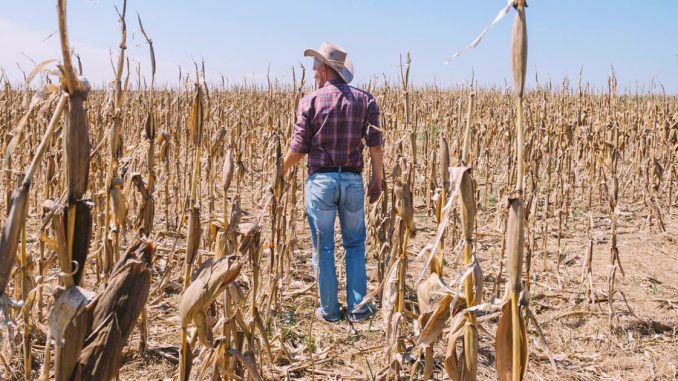
Scientists warn that prolonged drought conditions in key agricultural regions could sharply reduce harvests while driving food prices even higher.
“A Super El Niño, combined with the current Middle East conflict and resulting fertilizer shortages, could have a multiplier effect on wheat, rice, and corn, which are already at risk due to reduced fertilizer availability during the planting season,” said Saskia van Gendt, chief sustainability officer at supply chain management company Blue Yonder.
“This will result in near-term shortages and price increases, along with a prolonged impact, since these crops are used as animal feed and in processed foods.”
Experts say rice may be particularly vulnerable because several of the world’s largest exporters, including Thailand, Vietnam, and India, are highly susceptible to El Niño-related drought conditions.
David Warrick, a supply chain risk specialist and former Microsoft executive, warned that consumers could soon see rising prices for everyday staples.
“After rice, I’d flag coffee, cocoa, palm oil, and sugar—all tropical commodities highly sensitive to El Niño-driven heat and drought,” Warrick said.
“For American consumers, that translates to pressure on everyday grocery staples like cooking oils, chocolate, packaged foods, coffee.”
Echoes of One of History’s Deadliest Disasters
Some scientists have drawn comparisons to the devastating Super El Niño of 1877-78, one of the strongest such events ever documented.
That historic weather catastrophe triggered severe droughts and crop failures across multiple continents and has been linked to famines that contributed to the deaths of tens of millions of people worldwide.
Many historians regard the event as one of the first truly global disasters in modern human history.
Today, conditions are already fragile in many parts of the world.
Food insecurity remains elevated, fertilizer supplies have been strained, and agricultural producers are facing mounting challenges from weather extremes and rising costs.
A Growing Threat To Global Stability
The emergence of a potentially historic El Niño comes at a time when governments are already struggling to contain inflation and stabilize supply chains.
A prolonged period of drought, crop failures, and commodity shortages could place additional pressure on vulnerable populations while driving food prices higher across developed nations.
Experts caution that the full strength of the system remains uncertain, but current forecasts indicate the world may be entering a period of significant economic and agricultural disruption.
If the developing Pacific warming event continues to intensify as projected, the consequences could extend far beyond weather forecasts, affecting food security, trade, and economic stability across the globe.












Be the first to comment