
Article By Ken Macon
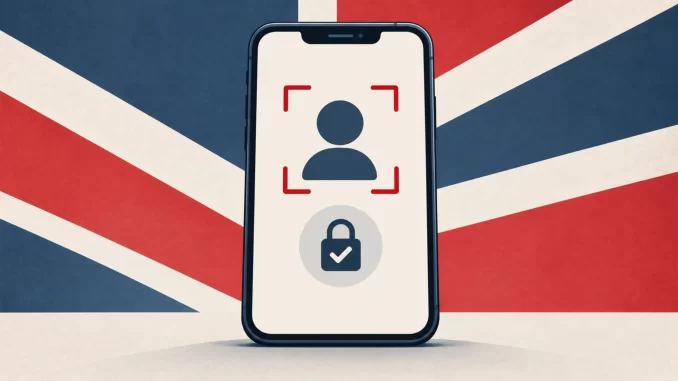
Ministers in the UK are preparing the ground for new rules that would keep under-16s off major social media platforms, with the strongest surveillance age checks yet, such as passports, driving licenses, credit checks, or facial age estimation.
This latest attempt at a ban on children using social media comes after evidence that a similar one in Australia has been widely circumvented.
The new rules will still apply to platforms that use infinite scrolling, autoplay, push notifications and unsolicited contact, and are expected to take effect in the spring of 2027.
Among those that will be targeted include Instagram, YouTube, TikTok, Snapchat, Facebook, and X.
Everyone opening a new account will have to go through either facial recognition or upload their ID.
The government’s fact sheet about the plan is heavy on platitudes, such as the need to protect children from online harm, but also tries to address the question of how exactly the new rules will affect adults.
Proving you are over 18 “could be as simple as a facial recognition check,” the document says.
The rules are being introduced as secondary legislation under the Children’s Wellbeing and Schools Act 2026.
The fact that the rules apply to websites rather than users means that those who want to access social media will be able to do so using a VPN, and this is expected to lead to a new wave of VPN adoption.
When the UK introduced age checks for adult sites in July 2025, some VPN providers reported a 1,800% spike in signups.
Which countries now demand ID online?
52 countries and territories have passed age ID check laws. See where yours stands.
Open the world mapUS mapTake action
In Australia, more than 60% of children were found to still be using social media months after the ban there came into force.
Many pointed to the example of Discord, which suffered a major data leak after introducing age checks, while the EFF said, “There remains no reliable, privacy-preserving method of verifying the age of every internet user.”
Previously, Culture Secretary Lisa Nandy said that the rules will come into force in March 2027, and that the goal is to “do proper, comprehensive legislation so that it doesn’t just incorporate the specific apps, it incorporates the features that we believe are not safe.”
Earlier in the year, Apple’s iOS 26.4 age check in the UK left users who don’t have a credit card or a photocard driving license unable to prove their age. A 67-year-old retired teacher had her browsing filtered because she pays for everything with a debit card.
The result of the latest attempt to keep children off social media is that they will likely continue to use VPNs to bypass the rules, while the adults will be “caught” by the new rules and “forced” to hand over their passports.












Be the first to comment