
Article By Frank Bergman
The growing list of dead and missing scientists tied to sensitive U.S. research is taking a darker turn, as newly surfaced messages from one of the victims raise serious questions about whether these cases are truly random.
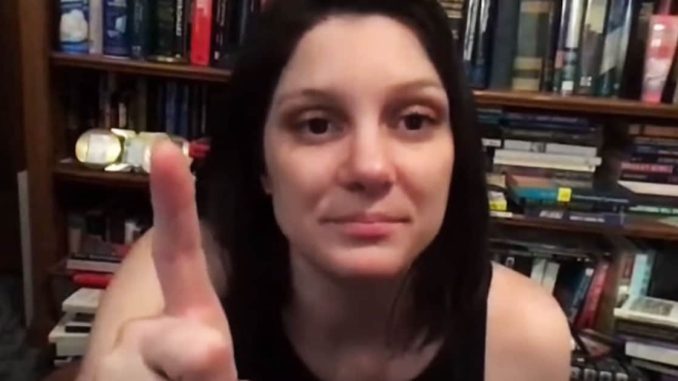
At the center of the latest revelations is Amy Eskridge, a 34-year-old researcher working on anti-gravity technology.
Her death was officially ruled a suicide after she was found with a gunshot wound to the head in Huntsville, Alabama, on June 11, 2022.
Now, years later, messages she allegedly sent before her death are fueling concerns that something far more disturbing may have been unfolding behind the scenes.
“If You See Any Report That I Killed Myself… I Did Not”
Retired British intelligence officer Franc Milburn, who says he was in contact with Eskridge before her death, has released text messages he claims she sent in the weeks leading up to the incident.
One message, dated May 13, 2022, reads:
“If you see any report that I killed myself, I most definitely did not.
“If you see any report that I overdosed, I most definitely did not.
“If you see any report that I killed anyone else, I most definitely did not.”

Milburn says he spoke with Eskridge just four hours before her death and observed nothing unusual.
“She said, ‘Everything’s fine, Franc, I’m feeling okay,’” he claimed.
He also says Eskridge repeatedly warned that if anything happened to her, it should be treated as suspicious.
Claims of Harassment, Surveillance, and Targeting
According to Milburn, Eskridge believed she was being targeted because of her work in advanced propulsion and energy systems, research that, if successful, could have major implications for aerospace and defense.
He alleges she described a sustained campaign of harassment, including break-ins, surveillance, and attempts to drug her.
Eskridge reportedly told him that strangers would approach her in public settings and question her about her research.
“A group of anywhere between two to six people will walk into a location… then the whole group will take turns one at a time rotating through the empty seat next to me,” she allegedly wrote.
“They even all use the same opening line… as if they all read the same briefing materials.”
She also claimed her apartment had been broken into multiple times, with signs deliberately left behind.
Disturbing Allegations of “Directed Energy Weapon” Attacks
Among the most alarming claims are allegations that Eskridge believed she had been physically attacked using what Milburn described as a “directed energy weapon.”
He says she sent images showing burns and lesions on her body, which she attributed to such an attack.
In one message, she reportedly wrote:
“My ex-CIA weapons guy on my team saw my hands when they were burned… he said he had built things like that.”
She further claimed the expert believed the device could have been operated from a nearby vehicle and may have been used by a U.S.-based contractor attempting to derail her research.
Timeline Raises Further Questions
Milburn also pointed to the rapid timeline following Eskridge’s death as a cause for concern.
“Why was she cremated so quickly?” he asked.
“She phoned me four hours before she died… then a few hours later she has an autopsy, and then on the Sunday, she’s cremated.”
He claims colleagues and associates later came forward anonymously, describing similar incidents of harassment, including break-ins, drugging, and threats.
Family Pushes Back as Questions Mount
Eskridge’s father, Richard Eskridge, a former NASA scientist, has rejected claims that her death was suspicious.
“Scientists die also, just like other people,” he said.
Her family also cited her struggles with chronic pain and urged against speculation.
However, those close to the broader investigation argue that her case cannot be viewed in isolation.
Pattern of Deaths and Disappearances Intensifies Scrutiny
Eskridge is one of at least 12 scientists tied to nuclear, aerospace, and advanced research fields who have died or disappeared under unusual circumstances since 2022.
The pattern has drawn the attention of President Donald Trump and congressional investigators, who have vowed to determine whether the cases are connected.
“I hope it’s random, but we’re going to know,” President Trump said recently.
Lawmakers, including Rep. Eric Burlison (R-MO), have pushed for federal investigations into the growing list of cases, citing concerns about potential links and the sensitive nature of the work involved.
Whistleblower Warnings and Congressional Attention
Milburn has taken his findings to Washington, where they were referenced during congressional discussions on Unidentified Aerial Phenomena (UAPs).
Journalist Michael Shellenberger also cited Eskridge’s case in testimony addressing alleged retaliation against individuals connected to sensitive government programs.
Milburn maintains that Eskridge’s death was not a suicide and claims she was targeted due to her research.
“I would give a lot of credence to her,” he said. “There’s gonna be people saying she’s delusional… just follow the facts.”
Disturbing Video Message
Shortly before she died, Eskridge warned during a podcast interview that she was being followed and feared for her safety.
She stressed that individuals were watching her home and threatening her life.
Eskridge repeatedly stated that she needed “to disclose” for her own safety but didn’t elaborate further.
WATCH:
A Growing Crisis With No Clear Answers
The emergence of Eskridge’s messages adds a new layer of urgency to an already troubling pattern.
Multiple scientists.
Sensitive research.
Repeated claims of harassment.
And now, warnings from one of the victims herself that her death should not be taken at face value.
Federal agencies, including the FBI, are now under increasing pressure to connect the dots and determine whether these cases are isolated incidents or part of something far more coordinated.
For now, the questions continue to pile up, with few clear answers.












Be the first to comment