
Article By Ashlynn Green
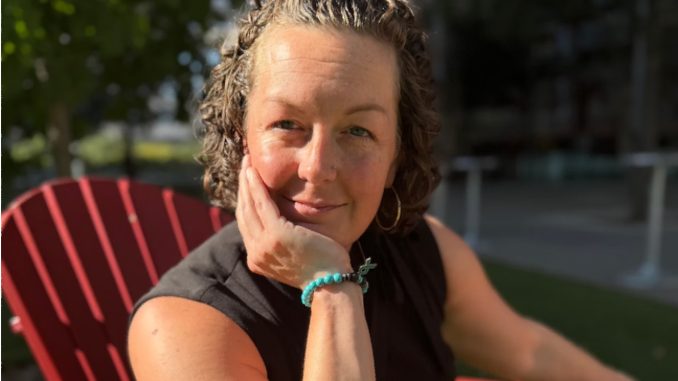
Kristin is a wife, mother, and veteran of the US Air Force, who was diagnosed with stage four ovarian cancer. What followed was not just a battle against disease, but a fight for her very dignity.
Living in Canada, Kristin says doctors told her her only option was physician-assisted suicide. Instead of offering aggressive treatment or hope, she was allegedly told that her condition was terminal and that procedures like HIPEC surgery would not save her life.
Rather than honoring her life, the system presented her with a devastating alternative: end her life early instead of pursuing further care.
But Kristin and her husband, Donovan, refused to accept that answer.
Determined to fight for her life, the couple made a bold decision. They arranged to travel to the United States, searching for doctors who would be willing to treat her. In Seattle, they found that hope. Doctors quickly moved forward with HIPEC surgery and chemotherapy—treatment options they had been told would not help.
Those treatments saved her.
(Warning, video uses strong language)
A Canadian man is going viral for refusing to accept Canadian healthcare’s only option for his wife’s stage four ovarian cancer, medical assisted dying, choosing instead to flee to the United States for treatment, where doctors began immediate care, leading to near total… pic.twitter.com/sGHslWKTez
— Right Angle News Network (@Rightanglenews) April 13, 2026
After completing that phase of care, Kristin returned to Canada to recover and be close to family. But her relief was short-lived. She soon faced another medical emergency and, once again, found herself without adequate treatment. Her condition became so severe that she was at risk of sepsis.
Donovan stepped in again, urgently transporting her by car and ferry back to the United States. There, doctors treated her and saved her life once more.
This cycle repeated when her cancer returned. But by then, Kristin and Donovan knew one thing for certain: assisted suicide would never be their answer. They chose hope. They chose to keep fighting.
In the end, with help from a congresswoman, her husband—a Canadian citizen—was able to get a green card and move to the United States for her treatment. Today, they live in Texas, where Kristin continues to receive advanced, life-affirming medical care.
“There’s no MAiD here… No one talks about death. In fact, my wife is doing so good right now on chemo, while she’s already had two recurrences, and she’s going into a third remission… She is back squatting 175 pounds for five in the gym just last week. Does that sound like someone who’s ready to die, Canada? Does that sound like someone who needs to kill themself with MAiD (Medical Aid in Dying)?” Donovan said.
Kristin’s story highlights a growing and deeply concerning trend.
In some countries and U.S. states, euthanasia and physician-assisted suicide—often referred to as “medical aid in dying”—are promoted as compassionate solutions to suffering. While Texas does not allow physician-assisted suicide, it remains legal in certain parts of the United States.
In these cases, a physician may prescribe or provide lethal drugs, which the patient then takes to end their own life.
This raises serious ethical concerns.
Every human life has inherent value, regardless of age, illness, disability, or prognosis. Laws that promote assisted suicide risk sending a dangerous message—that some lives are no longer worth living or protecting.
This is especially dangerous for the most vulnerable.
Patients facing serious illness may feel pressure—whether spoken or unspoken—to choose death so they do not feel like a burden on their families, caregivers, or even the healthcare system. What is presented as a personal “choice” can quickly become an expectation.
Instead of offering hope, these policies can normalize despair.
Real compassion does not come from hastening death. It comes from walking with people through suffering.
Patients deserve access to quality medical treatment, effective pain management, emotional support, and compassionate hospice care. They deserve to be reminded that their lives still matter—even in their hardest moments.
Pro-Life advocates believe that our response to illness should never be abandonment. It should be care and dignity.
Kristin’s story is a powerful reminder of what can happen when we choose Life—when we refuse to give up, when we seek treatment, and when we affirm the dignity of every human person.
Every life is worthy of care, protection, and love until natural death.












Be the first to comment