
Article By Cam Wakefield
It was a busy week for the cameras. Nobody, we were assured, would have their face read without the option of going somewhere else instead.
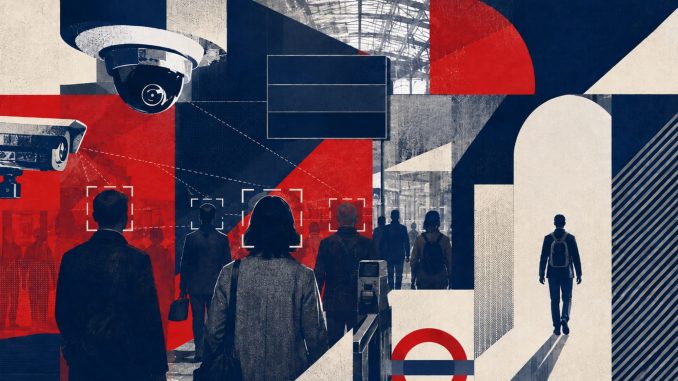
That was the promise at Victoria Underground on Tuesday, where British Transport Police switched on live facial recognition and, with the manners of a good host, laid on “alternative routes” and clear signage so that everyone could make “informed choices about passing through.”
The choice on offer being to let a police computer check your face against a watchlist, or to find some other way into the station, on a Tuesday, at the start of a trial booked to run four months.
The scale is where courtesy starts to sing. TfL’s own draft annual report logs over 1.2 billion passenger journeys in the year, around 3.3 million a day, and since most of those are the same tired people going to work and trudging home again, the honest figure for faces passing a lens on any given day is merely hundreds of thousands, possibly the far side of a million. Each of them, presumably, informed.
The weekend before, Greater Manchester Police had taken the same idea to the Manchester Caribbean Carnival, a party going strong since 1971, where the Manchester Evening News reckoned 60,000 people would turn out across two days of parade, soca and steelpan. The force said the cameras produced 34 alerts and 11 arrests, and that a missing child was found, which is the part no one with a heart wants to be sour about.
Then, emboldened, GMP put out a press release on Tuesday to tell us all how splendidly it is going. 641,000 faces were scanned across 56 deployments. 208 alerts. That’s to say that 99.97 percent of everyone the force has ever photographed at one of these things set off precisely nothing, roughly one ping for every 3,082 law-abiding citizens run through the machine.
Was anyone asked? No, but signage was provided.












Be the first to comment