
Article By Leah MarieAnn Klett
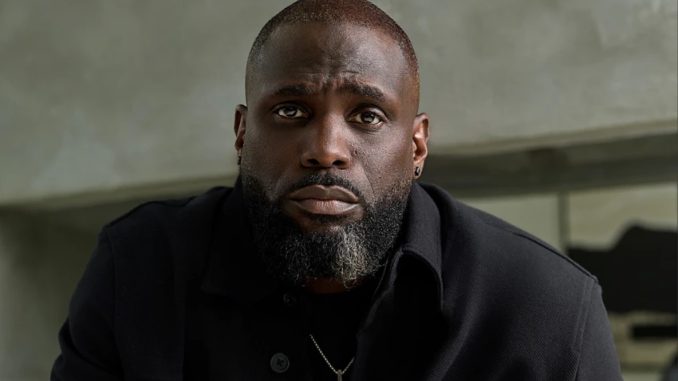
Philip Anthony Mitchell, pastor of one of the fastest-growing churches in the United States, is warning that biblical illiteracy has helped create a generation of Christians attracted to spirituality but increasingly disconnected from Scripture.
“What we see right now is a love for spirituality, a love for platforms, a love for acclaim, and all these things, but not a love for biblical theology, and not enough love for biblical literacy,” The founder and lead pastor of Atlanta’s 2819 Church told The Christian Post. “We see a lot of opinions, but not a lot of Bible.”
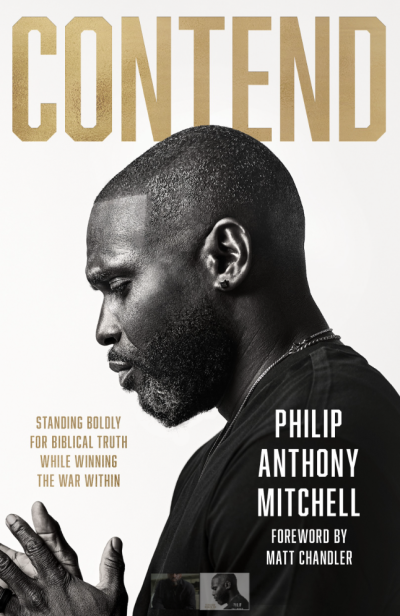
Mitchell, whose forthcoming book, Contend: Standing Boldly for Biblical Truth While Winning the War Within, is releasing on Oct. 13, said he’s seen the problem extending across Western Christian culture, from churches and conferences to worship music, podcasts and social media.
“A lot of conferences, little Bible. A lot of sermons, little Bible. A lot of songs, little Bible. A lot of podcasts, little Bible,” he said. “We need to help the culture to love the Scriptures and not be so illiterate about God’s truth.”
Mitchell said he regularly urges members of 2819 Church, as well as what the ministry calls its “digital disciples” around the world, not to rely solely on ministry leaders, pastors, podcasts or online personalities for their understanding of Christianity.
“I encourage them to read the Scriptures for themselves, to not just depend on podcasts for all their theology, and not even depend on me and my sermons,” he said.
At times, Mitchell said, he gives his congregation homework, challenging members to choose a short New Testament letter, read it slowly and then compare its teachings with the Christianity they encounter in culture.
“[People say], ‘I never knew that was in the Bible,’” Mitchell recalled. “I never knew that the Apostle Paul said this. That sounds like nothing I see on social media. … The more truth we know, the easier it is to discern a lie. And the more Word we know, the more God can shape us on the inside.”
Mitchell’s concern over the erosion of biblical Christianity inspired Contend, in which the viral pastor calls Christians to “contend for the faith” as described in Jude 1:3 while confronting both cultural pressures and the spiritual battles within themselves.
The idea for the book took shape after a January 2024 trip to Turkey, ancient Asia Minor, where the Apostle Paul ministered and where the seven churches addressed in Revelation 2 and 3 were located. Mitchell shared how seeing a region where Christianity once flourished but no longer holds the influence it once did left him concerned about the future of Christianity in the West.
“What happened in the East can happen over here,” Mitchell said.
The warnings Jesus gave the churches in Revelation, like those about abandoning their first love and lukewarm faith, represent patterns the pastor warned can repeat themselves throughout Church history.
“We cannot be so comfortable in the West to think what happened in the East can’t happen here in the West,” he stressed. “If we in this generation don’t take a stand for the faith, if we don’t contend for the faith, if the Lord tarries, it’s going to be our children, our grandchildren [who] are going to suffer.”
Mitchell said he fears that if Christianity continues to lose influence in the U.S., other religious and ideological movements could fill the void. This, he contends, will inevitably create an environment increasingly hostile to Christians.
“My fear is that if we continue on this trajectory, my fear is that the influence of biblical Christianity will decrease,” he said, warning that the ultimate result could include “open persecution against Christians in our country.”
Yet Mitchell said the most serious danger facing Christianity is not necessarily coming from secular culture or other religions but from within the church itself. The warnings issued to the churches in Revelation, he said, reflect similar patterns that can be seen in the church today.
“It looks like the pulpits in America are abandoning fidelity to biblical preaching for the sake of more like TED Talks and compromise messages for the sake of keeping people comfortable,” he said. “It looks like leaders in the Church living lives of compromise in the dark that are blowing up in the public. It looks like believers not being serious about the Great Commission and being witnesses for Jesus.”
Mitchell addressed prosperity theology and preaching he believes is designed primarily to affirm and “tickle the ears” of listeners rather than confront them with biblical truth. He cited the Apostle Paul’s warning in 2 Timothy 4 that people would gather teachers who tell them what they want to hear to show that preaching flourishes because there is an audience demanding it.
“The blame has to fall first on our own appetite, and then also has to fall on the people who are feeding that appetite,” he said. “We don’t want to be convicted. We don’t want to be challenged. We don’t want to hear, ‘Come out of sin.’ We don’t want to hear, ‘Live holy.’ But what we do want, we want everything that’s going to keep us comfortable and compromised to our own detriment.”
That message is clearly resonating; once a relatively small congregation, 2819 Church now draws 6,000 worshippers each week, with millions watching online. Congregants reportedly line up long before the church doors open to experience 2819’s robust preaching and worship.
Despite his popularity, Mitchell said his willingness to deliver messages that can make listeners uncomfortable stems from his belief that his ultimate accountability is to Christ rather than an audience.
“My reward is not going to come from sitting on platforms and podcasts and having a big following,” he said. “My reward is going to be the crown that I lay down at the feet of Jesus for being faithful to the assignment He’s given me, even if it comes at the cost of being misunderstood, persecuted or pushed to the side.”
The pastor stressed that Christian witness should begin privately and then become evident in believers’ homes, workplaces, churches and everyday interactions. That begins, the father-of-four said, with parents discipling their children and discussing faith in the home before extending to how Christians conduct themselves in culture and the workplace.
“We were not saved to just be churchgoers,” Mitchell said. “If [we are] truly followers of Jesus Christ, He saved us to be witnesses and to be lights in this dark generation.”
Mitchell sees that need for authenticity firsthand in his own family. He and his wife have four children, ranging from their teenage years into young adulthood, and he said their reactions to Christian personalities online have convinced him that younger generations are particularly sensitive to hypocrisy.
“This generation, they’re looking for authenticity,” Mitchell said. “They can smell a phony from a mile away. They don’t want that fluffy, soft, fake Jesus that we’ve created. They don’t want to be coddled.”
“Our generation does not have a problem so much with God. They have a problem with the people who represent Him,” Mitchell added. “They want truth. They want authenticity. They want to be challenged.”
In his book, Mitchell also addresses the willingness of pastors and ministry leaders to acknowledge their own struggles. The pastor writes candidly in the book about his battle with depression, emphasizing that Christian leaders can harm those they serve when they put on a mask of spiritual perfection.
“If they think that we are perfect, we do them a disservice because we create for them a narrative in their mind that we are living at a level that they could never get to in spirituality, which is fake,” Mitchell said.
“Yes, I’ve made some mistakes. Yes, I struggle in this area. Yes, I battle with insecurity. Yes, I battle with dark times,” Mitchell said. “When people you admire talk like that, you know what it gives the person listening? Hope. … I let people see a little bit of my humanity, which gives them hope that Jesus is using all of us who are broken vessels.”
For Christians who feel overwhelmed by cultural changes or problems within the Church, Mitchell said the answer is not to immediately enter cultural battles but to pray for revival, for pastors and church leaders, and for God to expose sin in their own hearts.
“I would not encourage people to read my book or just run out and start contending in the culture before they’re contending in prayer,” he said. “Prayer is really the secret sauce. I think the battle is first won in the prayer closet.”
Contending for the faith, the pastor emphasized, is about how Christians live in ordinary life, how faithfully they work, speak, treat others, spend money, support ministries and respond to those in need.
“It looks like us being what Jesus called us to be, witnesses for Him in the home, in the marketplace, in our churches, in our cities, in our nation,” Mitchell said. “It has to start in private. It has to start with prayer.”












Be the first to comment