
Original Article By Mark Swanson
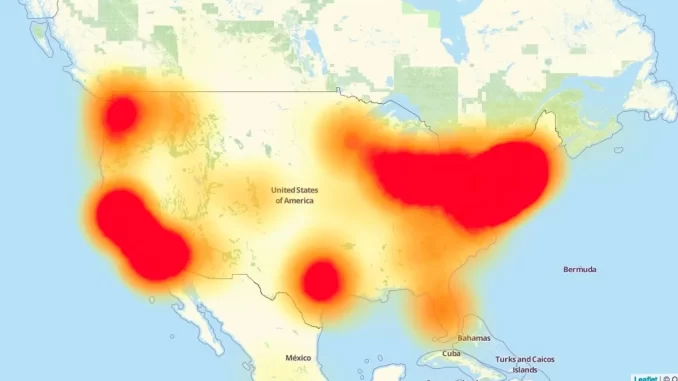
Internet disruptions are becoming more frequent and more sweeping, according to experts, after a string of major outages has repeatedly knocked large parts of the online world offline.
This week’s crash at Cloudflare — which caused hour-long problems for platforms including X, OpenAI, and Discord — marked the third significant outage in roughly a month, NBC News reported Sunday.
The incidents highlight a central vulnerability: much of the modern internet relies on a handful of giant cloud providers. When one makes even a small mistake or misses a hidden software flaw, the fallout can ricochet across millions of users and businesses.
“This spate of outages has been uniquely terrible,” Erie Meyer, former chief technologist at the Consumer Financial Protection Bureau, told NBC News. “It’s like what we were told Y2K would be like — and it’s happening more often.”
Cloud companies known as “hyperscalers” dominate the modern internet because they can expand infrastructure quickly and cheaply. But critics warn this consolidation creates dangerous single points of failure.
“When one company’s bug can derail everyday life, that’s not just technical — that’s consolidation,” Meyer said.
NBC reports the disruptions began Oct. 20 when Amazon Web Services went down, cutting access to everything from gaming networks to Ring cameras. The outage even affected smart-home beds.
Sen. Elizabeth Warren, D-Mass., recently blasted the situation on X, calling it reason “to break up Big Tech.”
Nine days later, Microsoft’s Azure cloud platform suffered a global outage just before the company’s quarterly earnings. Delta and Alaska Airlines — which rely on AWS and Azure — struggled to check in passengers online.
Cloudflare’s outage on Tuesday was the worst the company has seen since 2019, CEO Matthew Prince acknowledged. The company first suspected a massive cyberattack but later traced the failure to a software flaw in its anti-bot system.
AWS and Microsoft, meanwhile, dealt with separate problems tied to the Domain Name System — the internet’s notoriously fragile “phonebook” that links web addresses to their numeric destinations.
These failures follow last year’s global incident in which a faulty CrowdStrike update caused Windows systems worldwide to crash, grounding flights and knocking out hospital and police networks.
As NBC notes, all these crises were triggered by relatively small software errors that cascaded through massive systems.
Experts warn the growing concentration of cloud infrastructure poses a national-security concern. Asad Ramzanali of Vanderbilt Policy Accelerator told NBC News the dependence on a few companies is “both a market failure and a national security risk.”
Others are calling for stronger oversight. Public Citizen’s J.B. Branch told NBC that with so much of the economy running on private cloud networks, “There needs to be investigations whenever these outages happen.”


Be the first to comment