
Article By David Lindfield
A northern Kentucky family is refusing to sell off generations of farmland, despite a massive $26 million offer from a major artificial intelligence (AI) company seeking to build a data center on the property.
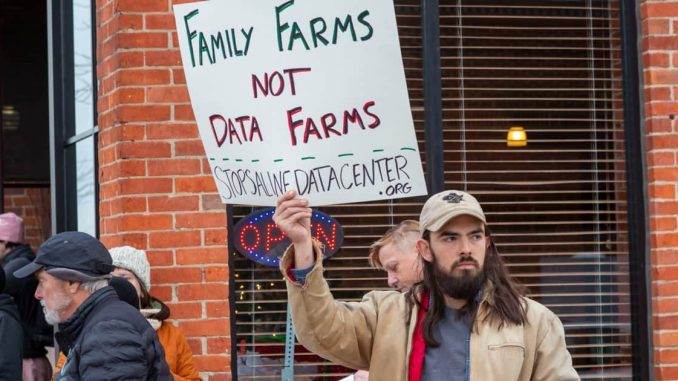
The decision underscores a growing clash between large-scale tech expansion and longstanding agricultural communities, as families weigh financial windfalls against heritage, food production, and control over their land.
Family Rejects Lucrative Deal to Preserve Land
Ida Huddleston and her family own roughly 1,200 acres of farmland outside Maysville.
In April, an unnamed Fortune 100 AI company approached them with an offer to purchase about half the property.
Huddleston’s daughter, Delsia Bare, made clear the family has no intention of selling, regardless of the price.
“Stay and hold and feed a nation,” Bare told Local 12 News.
“My grandfather and great-grandfather and a whole bunch of family have all lived here for years, paid taxes on it, fed a nation off of it,” she said.
“Even raised wheat through the Depression and kept bread lines up in the United States of America when people didn’t have anything else.”

According to the report, land in Mason County typically sells for about $6,000 per acre, making the $26 million offer roughly ten times market value.
Skepticism Over Tech Expansion and Promises
Huddleston pushed back sharply against claims that a data center would benefit the local economy.
“They call us old, stupid farmers, you know, but we’re not,” Huddleston said.
“We know whenever our food is disappearing, our lands are disappearing, and we don’t have any water, and that poison.
“Well, we know we’ve had it.”
“I say they’re a liar, and the truth isn’t in them, that’s what I say. It’s a scam.”
Bare echoed that sentiment, emphasizing the personal and cultural value of the land.
“Her spirit never would die,” she said, referencing Scarlett O’Hara in “Gone With the Wind.”
“That’s the exact same thing for me right here.
“As long as I’m on this land—as long as it’s feeding me—as long as it’s taking care of me—there’s nothing that can destroy me if I’ve got this land.”
Growing Pressure From Data Center Expansion
The Huddleston family is not alone.
Bare said dozens of nearby landowners have also been approached by the same anonymous buyer, signaling a broader push to secure large tracts of rural land for AI infrastructure.
Industry data reflects the trend.
According to Cushman & Wakefield, the average data center land deal has expanded to 224 acres, up 144% since 2022, as demand for computing power surges.
At the same time, around 40 states are now offering tax incentives to attract such projects, intensifying pressure on rural communities to sell.
A Broader Battle Over Land and Priorities
The standoff highlights a deeper tension between rapid technological expansion and traditional land use.
For families like Huddleston’s, the issue isn’t just financial.
Keeping farmland in the family is about food production, self-sufficiency, and preserving a way of life that has endured for generations.
As major tech firms continue their push into rural America, more communities are likely to face the same question of whether they should take the money or hold the line.












Be the first to comment