
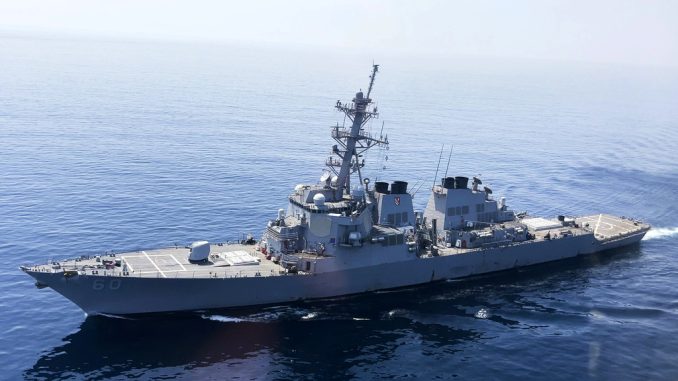
Iran’s parliament voted to close the Strait of Hormuz, which comes after the United States dropped 14 bunker-busting bombs on three nuclear facilities in Iran in a surprise B-2 bombing raid, codenamed “Operation Midnight Hammer,” on June 21.
Iran’s Mehr news agency, citing Behnam Saidi of the Iranian parliament’s security committee, reported last Thursday that Tehran was considering closing the strait due to Israeli attacks on its territory in the week leading up to the U.S. strike. Israel is given credit for destroying a large part of Iran’s air defenses, paving the way for a smooth run by the 125-plane strong American offensive.
Tehran has repeatedly threatened to close the strait many times in the past, but has never done so. The passageway is one of the world’s most important maritime trade routes, carrying some 20 percent of global oil supplies, or 18 million barrels of oil per day.
The Strait connects the Persian Gulf with the Arabian Sea and further with the ocean, allowing oil exports not only from Iran but also from countries such as Saudi Arabia, Iraq, Kuwait and the United Arab Emirates.
Experts say a potential blockade could immediately increase oil prices by 30 to 50 percent and fuel prices by up to $5 per gallon worldwide, reports Magyar Nemzet.
Although this vote by parliament is not final, it sends a message to the country’s top leadership that lawmakers support a strategic response. The final decision rests with Iran’s Supreme National Security Council and Supreme Leader Ali Khamenei.
The Strait connects the Persian Gulf with the Arabian Sea and further with the ocean, allowing oil exports not only from Iran but also from countries such as Saudi Arabia, Iraq, Kuwait and the United Arab Emirates. Any disruption in the passage of ships through Hormuz will translate into an increase in the price of oil on world markets.

The rising risk of war in the Middle East has more than doubled the price of chartering large tankers through Hormuz, according to data from Clarksons Research, cited by Do Rzeczy. The daily cost of chartering a ship carrying two million barrels of oil from the Persian Gulf to China, for example, has risen from about $20,000 two days before Israel attacked Iran to more than $47,600 on Wednesday.
According to the Guardian, the UK Maritime Trade Operations (UKMTO) has assessed the threat to US commercial shipping in the Red Sea and Gulf of Aden, near Iran, as “high.”


Be the first to comment