
Article By Leah MarieAnn Klett
Ahmed Joktan was raised in a deeply religious Muslim family in Saudi Arabia, memorized the entire Quran by age 13, and was expected to follow in the footsteps of generations of relatives devoted to Islam. Christianity wasn’t something he had considered, and certainly was never a faith he imagined embracing.
But an unexpected encounter with a church in New Zealand changed the trajectory of the Mecca to Christ founder’s life, setting him on a path that would eventually cost him his family, his home, and 13 teeth after he was violently attacked for converting to Christianity.
Today, Joktan is a Christian evangelist who shares his testimony and equips believers to reach Muslims with the Gospel. In an interview with The Christian Post, the author of From Mecca to Christ: A True Story from the Son of the Meccan Mufti reflected on his journey from Islam to Christianity, the persecution he endured, and why he believes Western Christians must overcome their fear of evangelizing Muslims.
“The cost of believing in Jesus is real,” Joktan told CP. “I have experienced that myself. I have scars on my face, on my back. I have lost 13 teeth because of that.”
Yet despite the suffering, Joktan said he’s never regretted his decision to follow Christ; and though his name was erased from his family’s lineage, “my name is now in the Book of Life,” he said.
“I was so excited to see the light that I did not count the cost,” he said.
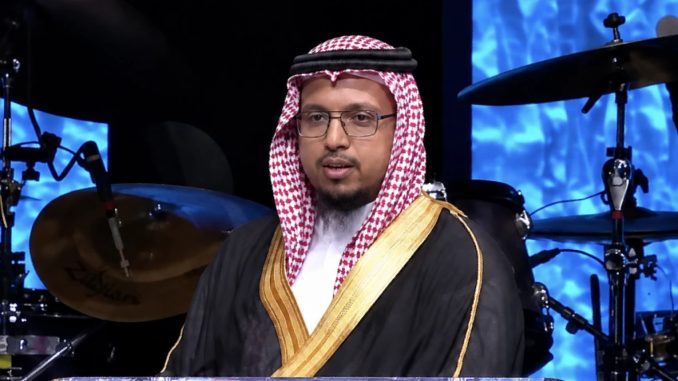
Joktan, who recently spoke alongside Egyptian-born pastor and evangelist Michael Youssef at AWAKE Houston, said his ministry is focused on helping Christians understand Islam, engage their Muslim neighbors and share their faith with confidence and compassion.
His story began in Saudi Arabia, where his father served as a mufti, an Islamic religious scholar authorized to issue legal opinions under Islamic law. Joktan’s upbringing was particularly strict, as his family’s religious convictions shaped nearly every aspect of his childhood.
He attended an Islamic school where, he said, English wasn’t taught because it was considered the language of unbelievers. By 13, he had memorized the Quran, and after graduating from high school, he enrolled in medical school.
But because medical education in Saudi Arabia was conducted in English, Joktan struggled to keep up with his coursework. Initially, he relied on Google Translate to understand his textbooks, spending hours copying and translating material. Eventually, he decided to travel to Auckland, New Zealand, to learn English.
What followed, he said, was an encounter he could never have anticipated.
After approximately two and a half months in New Zealand, Joktan said he experienced a vivid dream while sleeping in his hotel room. In the dream, he saw his balcony doors open, followed by an overwhelming light and the figure of a man.
A voice told him, “Come to me.”
He then saw an image of a building with white pillars and heard another instruction: “Go to the house of the white pillars, and in there you shall find the truth.”
Joktan said he woke up terrified, believing he had encountered a supernatural being: “I thought I saw a genie,” he recalled. He went downstairs to the hotel receptionist at 3 a.m. and insisted that something was wrong with his room, and even contacted his travel agency to arrange a return flight to Saudi Arabia.
The next morning, while attending English classes, Joktan shared the dream with his classmates. His teacher, a Christian, told him she believed he had seen Jesus.
At the time, Joktan said, his limited English made it difficult to understand what she meant. But later that day, while wandering through Auckland, he came upon a building that looked exactly like the one he had seen in his dream, and unbeknownst to him, it was a church.
Inside, he met Pastor Brian Johnson, who, according to Joktan, had been praying with members of his congregation for an opportunity to share the Gospel with someone from Saudi Arabia.
The church, which traced its history to Thomas Spurgeon, son of the famed British preacher Charles Spurgeon, had spent two weeks praying for exactly such an encounter. After hearing Joktan’s story, Johnson began explaining Christianity using concepts familiar to Muslims, including the Quran’s references to Jesus as the Word of God.
Over the next three days, the two discussed sin, salvation and the identity of Christ. Johnson eventually introduced Joktan to the Gospel of John, beginning with its opening description of Jesus as the Word.
“At first, I resisted reading the Bible because I had been taught that Christian Scripture had been corrupted, he recalled. But as he continued reading, he encountered John 14:6, in which Jesus declares, ‘I am the way, the truth, and the life. No one comes to the Father except through me.'”
Johnson then asked whether Joktan wanted to repent of his sins and accept Jesus Christ as his Lord and Savior.
“To that I said yes, not knowing what will happen next,” Joktan recalled.
After returning to Saudi Arabia, Joktan secretly brought an Arabic New Testament into the country, hiding it among his English textbooks. He began reading Scripture privately, often waiting until other members of his household had gone to sleep. But one day, while preparing for an exam, he forgot to conceal the Bible, and a household employee discovered it, and his family learned of his conversion.
“At that time, Saudi Arabia didn’t allow Bibles to be brought into the country, and there were no church buildings in Saudi Arabia,” he said. “She (the household employee) saw I brought the book for Christians into the holiest house in all of Islam, and it was a big no-no, because with that it carried the shame on my family.”
Joktan’s brothers beat him and his father threatened him with an AK-47, accusing him of bringing shame upon the family. His father ordered him to burn the Bible, a demand Joktan said he eventually obeyed after concluding that God’s Word could remain in his heart even if the physical book was destroyed.
He was subsequently disowned and removed from the family tree. Joktan relocated to another city in Saudi Arabia and remains estranged from his relatives.
Still, he stressed that his family’s response shouldn’t be viewed as representative of all Muslim households: “This is not your typical Muslim household,” Joktan said. “My family are ultra-fanatic Muslims. Usually, typical Muslims don’t adhere to such teachings from the Quran.”
Joktan said the persecution he experienced has given him a deeper understanding of biblical passages about suffering and sacrifice for Christ. He pointed to Jesus’ promise that those who leave family or possessions for the sake of the Gospel will receive blessings in return. And for the evangelist, that promise has been fulfilled through the Christian communities that have welcomed him around the world.
“Whenever I go to a new town, city, country, I find believers who would say we are your family,” he said. “I wish that more of the believers in the West would understand the consequences that their brothers and sisters are facing in other countries where it’s not allowed to be a believer in Jesus.”
Joktan is the co-founder of Mecca to Christ Ministries International, an organization dedicated to evangelism, discipleship, leadership development and supporting Christians from Muslim backgrounds across the Middle East, North Africa and North America. His outreach also includes online evangelism and discipleship aimed at reaching Muslims in countries where openly sharing the Christian faith can be dangerous.
He is also the author of The Invisible Bible and The Saudi & the Tall White Man, which he wrote alongside Pastor Johnson, books drawing on his conversion and experiences as a Christian from a Muslim background.
Joktan said one of his greatest concerns is that Western Christians frequently misunderstand Muslims, viewing them as a single group with identical beliefs and attitudes toward Christianity.
“The other thing is that many believers think that all Muslims are the same, and I think that is a big mistake,” he said.
He also rejected the notion that all Muslims support violence or extremism, emphasizing that his own family’s response to his conversion wasn’t typical of the wider Muslim population.
For Christians hoping to share their faith with Muslims, Joktan said the most effective approach is often simpler than they imagine. Rather than beginning with arguments about Islamic theology or attempting to win religious debates, he encourages believers to share their personal testimony.
“There’s nothing wrong about sharing your own testimony,” he said.
Joktan teaches Christians to structure their testimony around three questions: What was their life like before encountering Jesus, how did they come to faith, and how has the Holy Spirit changed their lives since? He recommends sharing those experiences in less than three minutes before inviting the other person to tell their own story.
“And at the end, don’t forget to say, ‘What about you?'” he said.
Joktan also encouraged Christians to familiarize themselves with references to Jesus in the Quran, which identifies Him as a prophet and includes accounts of His birth and miracles, while differing fundamentally from Christianity on His divinity and crucifixion. Those references, he said, can provide opportunities to introduce Muslims to the biblical account of Jesus and lead to conversions.
“Ninety-nine percent of Muslims are easy to communicate the Gospel with and easy to share the light of Christ with,” he said. “It really is very simple to share the Gospel with them.”
He pointed to the opening chapter of the Quran, which includes a prayer for guidance along the straight path, and suggested Christians use that language to introduce Jesus’ declaration in John 14:6 that He is the way to the Father.
The speaker and author also expressed concern about young Americans encountering Islamic apologetics through social media without having a strong understanding of their own Christian beliefs. He recalled speaking with a 16-year-old from a Christian family in North Carolina who had converted to Islam after engaging with Muslim content creators online.
“It’s so important for Christians to understand both the teachings of Islam and the foundations of their own faith,” he said, adding that he wants to help believers develop meaningful relationships with Muslims and communicate the Gospel in ways that are understandable and respectful.
Joktan emphasized that Christians who are concerned about Islam’s growing presence in Western countries should respond not with fear or hostility, but by fulfilling Christ’s command to make disciples, no matter the cost.
“Go ye and make disciples of all nations, and don’t forget your neighborhoods,” he said. “My challenge to Christians in the West is, as long as you obey Scripture, the schemes, the ideas, whatever Muslim Brotherhoods are planning for the West will be thwarted. It will not come to fruition.”












Be the first to comment