
Article By Frank Bergman
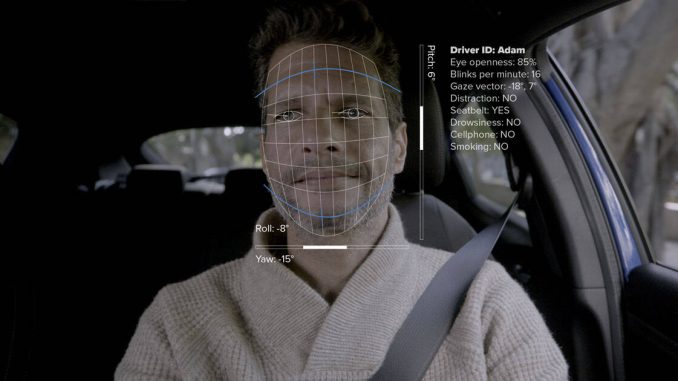
Unelected bureaucrats in the globalist European Union (EU) have taken a chilling leap forward with their anti-freedom agenda as all new cars and light commercial vehicles sold across the bloc must be fitted with cameras inside that monitor the driver’s face at all times.
The sweeping mandate came into effect on July 7, 2026.
From that date, an infrared camera aimed directly at the person behind the wheel becomes a legal condition of sale for all new cars and vans entering the EU market.
The rule is called Advanced Driver Distraction Warning, or ADDW.
It is part of the bloc’s General Safety Regulation, formally known as 2019/2144.
Carmakers have been required to install the technology in new vehicle types since July 2024.
Now the requirement applies to every new car and van sold across the EU.
The system tracks where a driver’s eyes are aimed and how the driver’s head is positioned.
It then decides whether the person behind the wheel has looked away from the road for too long.
At speeds between 20 and 50 kilometers per hour, the system must warn the driver if attention appears to drift for more than six seconds.
Above 50 kilometers per hour, the permitted time drops to three and a half seconds.
Each warning must be visible and reinforced by either sound or a physical buzz.
The alerts become more insistent the longer the software believes the driver is distracted.
Brussels Sells Surveillance as Safety
EU officials are presenting the mandate as a road safety measure.
The European Commission says the wider safety package is expected to prevent more than 25,000 deaths and 140,000 serious injuries by 2038.
The policy is part of the bloc’s Vision Zero agenda, which aims to eliminate road fatalities by 2050.
“The EU is a world leader in general safety rules for vehicles,” Thierry Breton, then the bloc’s unelected internal market commissioner, said as the broader rules took effect.
“We ensure that innovative technology solutions can be used to improve safety on our roads.”
But behind the safety language is a simple reality.
The law now requires a camera to face drivers every time they use a new vehicle.
It is not an optional feature or an upgrade selected by the buyer.
Nor is it something drivers can simply choose to add.
It is a standard condition of owning a new car or van in the EU.
Cars Will Watch Drivers on Every Trip
The regulation includes some stated limits.
The system is not allowed to use facial recognition or biometric identification.
The data it generates is not supposed to leave the vehicle.
It also cannot be passed to third parties.
In theory, the camera may track where a driver’s eyes are aimed while being forbidden from identifying who the driver is.
Those restrictions may sound reassuring.
But they are still just rules written by the same regulators who mandated the hardware in the first place.
Data can be stolen, and systems can fail.
Information can be swept up accidentally.
And future lawmakers can rewrite today’s limits.
That is the danger.
Once cameras are built into every new vehicle, the hardest part of the surveillance infrastructure is already complete.
After that, the only remaining question is what else regulators decide the cameras should monitor.
Mandate Normalizes Cabin Surveillance
Nobody needs to pretend distracted driving is safe.
Texting while driving at high speed is dangerous.
But the issue is not whether drivers should pay attention.
The issue is whether governments should normalize machines that watch citizens inside their own vehicles.
A generation of drivers is now being conditioned to accept a camera pointed at their face as a normal part of travel.
That is how surveillance expands.
Not all at once and not always through forceful rhetoric.
But through repeated claims that each new intrusion is necessary, reasonable, and safe.
The public has already been trained to tolerate always-on phones, smart devices, and doorbell cameras that record daily life.
Now the same logic is moving into the car.
Consent is manufactured through repetition.
What once would have seemed outrageous becomes routine.
Buyers Forced to Pay for Surveillance
Drivers will also pay for the mandate.
Cameras, sensors, processors, and software all cost money.
Those costs will be added to vehicles that are already expensive.
The bill will land on the buyers.
And the reach of the mandate will likely extend beyond the EU itself.
Switzerland and other markets that follow European vehicle rules are expected to move in the same direction.
That means Brussels is once again exporting regulation beyond its own borders.
The policy also exposes a strange double standard.
Advanced self-driving systems, which manufacturers argue can reduce crashes, still face heavy restrictions on European roads.
But cameras trained on drivers’ faces are being made compulsory.
Europe is cautious about machines that drive.
It is far more enthusiastic about machines that watch.
Surveillance Infrastructure Is Now Built In
The danger is not just what the cameras do today.
It is what they could be ordered to do tomorrow.
A driver-facing camera could eventually be used to monitor more than just distraction.
It could be used to track emotion, behavior, impairment, compliance, passengers, speech, or identity if future rules are changed.
Officials will insist that such concerns are speculative.
But the infrastructure is no longer speculative.
It is being installed in every new vehicle.
That is the key point.
Unelected eurocrats have mandated the lens, the software, and the monitoring.
The privacy promises come after the surveillance system has already been built.
Europe Takes Another Step Toward Total Monitoring
As dealerships across Europe open their doors this month, buyers are not just receiving keys.
They are accepting a government-mandated camera on every trip.
They are being told the footage will stay inside the cabin.
They are being told the software only cares where their eyes are looking.
They are being told not to worry.
But those promises only last until regulators decide they should change.
The EU’s driver-monitoring mandate is being sold as safety.
In reality, it marks another step toward a society where citizens are watched in more and more areas of daily life, from their homes and phones to public streets and now even behind the wheel.
The car was once a symbol of freedom and independence.
Under Brussels’ new rules, it is becoming another place where the machine watches you.












Be the first to comment