
Article By Truth Nigeria News Desk
‘Stop Word Games,’ End the Killings: EU Parliament
By Mike Odeh James and Izhi Bitrus Adamu
(Kaduna) – The European Parliament on July 9, 2026 delivered its sharpest rebuke yet of Nigeria’s handling of anti-Christian violence, with 501 lawmakers voting to demand the Federal Government end impunity in the Middle Belt following a village massacre.
The urgency resolution, adopted in Strasbourg, also addressed human rights breaches in Sudan and Pakistan. But Nigeria drew the harshest language, with Members of the European Parliament (MEPs) citing repeated assaults by armed groups on Christian farming communities and demanding concrete action from Abuja.
ADF (Alliance for the Defense of Freedom) International, which campaigned for the vote, said the Parliament “strongly condemns the ongoing persecution of Christians in Nigeria following a village massacre” and pressed for urgent EU diplomatic and humanitarian intervention.
“The European Parliament strongly condemns the ongoing persecution of Christians in Nigeria following a recent village massacre.”
– European Parliament Urgency Resolution, 9 July 2026
The vote lands at a pivotal moment. Washington signaled in early July that the bulk of American military personnel and intelligence support in Nigeria and the wider Sahel would be withdrawn, transferring greater responsibility to European and regional partners.
The timing has unsettled Brussels. MEPs warned during debate that a security vacuum could embolden armed groups already operating freely in Plateau, Benue, Southern Kaduna, Taraba and parts of the Northwest. With the United States stepping back, the EU faces pressure to take a direct role in pushing Abuja on civilian protection and accountability.
“The EU cannot afford to watch from the sidelines while communities are wiped out,” one MEP said. The resolution instructs the European Commission to deploy every available tool, including aid conditionality and targeted sanctions, to compel the Nigerian government to protect religious minorities.
Money on the Table: The €287 Million Question
The resolution capped weeks of scrutiny over EU funding to Nigeria. In April 2026, MEP Piotr Müller formally asked the Commission what conditions were attached to a new 287 million euro package of grants and loans, citing “persistent reports of violence against Christians, impunity for perpetrators, and wider violations of human rights and religious freedom.”
“EU financial support must not give the impression that the Union is prepared to turn a blind eye to persecution and poor citizen protection for the sake of maintaining political and migratory cooperation,” Müller stated.
Parliament demanded to know whether Nigerian authorities were assessed on prosecution of attackers before the package was announced, and whether future cooperation would hinge on measurable improvement.
According to Vanguard, the 501 lawmakers specifically told the FG to stop impunity in the Middle Belt, where villages have been repeatedly raided, burned and emptied.
In November 2025, a parliamentary question recorded that “more than 17,000 Christians were murdered” between 2019 and 2023, with “over 7,000 new killings and thousands of kidnappings” in the first seven months of 2025 alone.
In October 2025, 20 ECR MEPs declared that “Nigeria is currently the country most affected in the world by violence against Christians,” blaming “radicalised militias and groups operating with terrorist methods” and urging stronger EU diplomatic protection mechanisms.
The Commission of the Bishops’ Conferences of the European Union (COMECE) described the attacks as marked by “ferocity” and “coordinated and systematic patterns committed by Fulani Islamist terrorists.”
International reporting corroborates the pattern. Rights monitors note that Middle Belt Christians face violence from “Boko Haram, the Islamic State in the West African Province, and Muslim Fulani herders,” with whole villages razed and tens of thousands displaced.
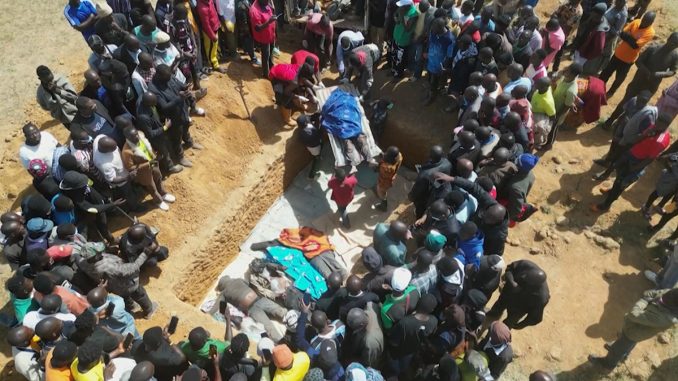
In Plateau, mass burials have become routine after coordinated raids. Survivors say government response is slow and perpetrators rarely face trial.
Abuja Squeezed From Both Sides of the Atlantic
The resolution compounds pressure already building in Washington. In late 2025, the Trump administration warned it was weighing sanctions and possible security engagement over the killing of Christians in Nigeria, citing religious freedom violations in its review of bilateral cooperation.
Domestic insecurity remains acute. In July 2026, kidnapped pupils and teachers in Oyo State were freed, underscoring the persistent threat to schools and communities.
Nigeria’s own lawmakers are shifting too. On July 7, 2026, the Senate rejected the rehabilitation of “repentant” terrorists, calling the policy “rewarding violence,” demanding prosecutions and seeking a meeting with President Bola Tinubu over worsening insecurity.
That stance pits lawmakers demanding justice against religious leaders urging dialogue, and reflects mounting anger in Middle Belt communities that say they have been abandoned to defend themselves.
What Comes Next?
Brussels has now sent its strongest signal. The resolution calls for deeper EU diplomatic engagement, expanded support for victims and civil society, and monitoring of EU aid to ensure it does not underwrite impunity. It also tasks the EU Special Envoy for Freedom of Religion or Belief and the EU Special Representative for Human Rights with prioritizing Nigeria in upcoming missions.
For Middle Belt communities, the vote is symbolic support; what they want is action. As American forces withdraw and European attention sharpens, Abuja must choose between confronting impunity and deepening international isolation. The Parliament’s message was unambiguous: the persecution of Christians in Nigeria is no longer an internal matter alone.
Mike Odeh James is an award-winning conflict reporter; Izhi Bitrus Adamu is a conflict reporter. They write for TruthNigeria.












Be the first to comment