
Article By Luka Binniyat
Christian leaders say the comments violate Nigeria’s constitutional protections and fuel dangerous narratives about religious ownership of the state.
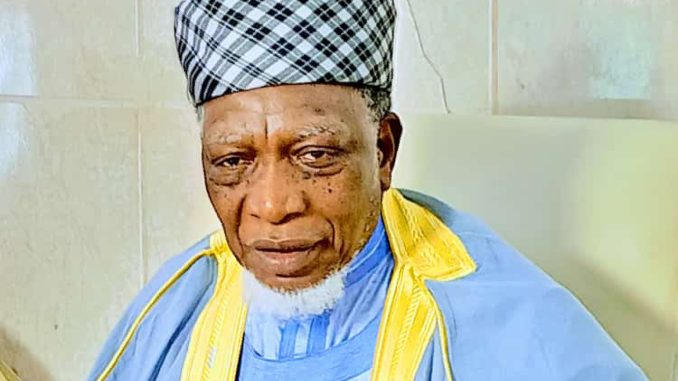
KADUNA, Nigeria — A firestorm erupted across Nigeria after influential Islamic cleric Sheikh Sani Yahaya Jingir declared that Christians are “infidels,” a minority, and should leave the country if they oppose Muslim–Muslim political leadership. The remarks, applauded by some officials present were made during an August 8 mass wedding in Kano, and triggered nationwide condemnation and reopened one of Nigeria’s most volatile questions: who actually constitutes the country’s religious majority, and what does that mean for political power in Africa’s largest democracy?
The remarks were widely reported by Nigerian media and generated intense argument.
Widespread Anger Over Jingir’s Remarks

The controversy has opened an important debate that Nigeria has avoided for decades: who exactly constitutes the religious majority in Nigeria?
The remarks have generated widespread anger, particularly because some political leaders present at the event appeared to applaud him. Vanguard reported that the Chairman of the Christian Association of Nigeria (CAN) in the 19 Northern States and Abuja, Rev. John Joseph Hayab, specifically criticised the remarks and said they could deepen religious tension.
“Jingir has the right to support a Muslim to be Nigerian President including his deputy,” said Apostle Michael Mathew Rikichi, National Coordinator, Christian Information Network of Nigeria (CINN) to TruthNigeria in Kaduna, Monday, “But the problem arises when his political choice becomes an argument for religious ownership of Nigeria or exclusion of other citizens from the number one job,” he added.
“The most disturbing part of Jingir’s argument is his suggestion that Christians who are unhappy with a Muslim-Muslim leadership should leave Nigeria. That goes far beyond electoral politics. Christians are not visitors in Nigeria. They are citizens with the same constitutional rights as Muslims,” he said.
Jingir May Be Right On Figures
With no official data on the numerical strength of different religions and beliefs in Nigeria, Estimates suggest Jingir could be partly right on one narrow statistical point.
The Pew Research Center estimated that in 2020 Muslims constituted 56.1 percent of Nigeria’s population, while Christians constituted 43.4 percent and other groups 0.6 percent. That amounted to roughly 120 million Muslims and 93 million Christians.
But the figures must be treated with caution. Nigeria has not had a reliable published national census of religious affiliation for decades.
Religion was excluded from the 2006 census, and subsequent attempts to conduct a new census have not produced a fresh national religious count.
Consequently, there is no recent Nigerian census that can definitively say that Muslims constitute a particular percentage of the country’s population.
Data Still Unreliable
Indeed, Pew acknowledges the uncertainty. Its 2025 analysis says its estimate is based on demographic data and projections rather than a recent Nigerian census. Earlier surveys have produced different results, sometimes showing a much narrower gap between Muslims and Christians.
This is important because Nigeria’s religious geography is far more complicated than simply saying “Muslims are the majority and Christians are the minority.”
Nigeria’s Religious Geography, Complex

The Middle Belt is the great religious bridge between the predominantly Muslim far North and the predominantly Christian South.
States such as Benue, Plateau and parts of Kaduna, Nasarawa, Gombe, Taraba, Adamwa, part of Kebbi state have large Christian populations. The Federal Capital Territory (FCT) is also religiously mixed. In other words, millions of Christians live north of the Niger-Benue confluence.
The U.S. State Department’s 2023 International Religious Freedom Report on Nigeria explicitly states that Christians constitute the majority in the South-East, a substantial majority in the South-South, and that Christianity is dominant in the South-West, while Lagos has a significant Muslim population.
Therefore, even if Muslims are numerically ahead nationally, Nigeria contains tens of millions of Christians who form overwhelming majorities in several regions.
Nigeria Cannot Be a Muslim Country
Nigeria’s Constitution does not establish an Islamic state. Section 10 expressly says that neither the Federal Government nor a state government shall adopt any religion as a state religion.
The Constitution also protects citizens from discrimination on the basis of religion. Section 42 states that a Nigerian citizen cannot, by reason of religion, be subjected to disabilities or restrictions to which citizens of another religion are not subjected.
This distinction was understood by prominent Nigerian Christian leaders during the 2023 election. Catholic Bishop Matthew Hassan Kukah described the Muslim-Muslim ticket as a setback to national integration and argued that it did not reflect Nigeria’s religious diversity.
Cardinal John Onaiyekan also opposed the Muslim-Muslim ticket, saying he would not vote for a party fielding such a combination. His argument was essentially that political power in a deeply divided society should be exercised with sensitivity to the country’s religious balance.
The Sultan of Sokoto, Muhammadu Sa’ad Abubakar III, regarded as the Muslim leader of the North, has urged Muslims and Christians to stop insulting one another and to respect each other’s faith as it concerns the utterance of Jingir.
After Jingir’s remarks, more than 50 Muslim and Christian leaders gathered in Abuja and signed a peace accord aimed at promoting religious harmony and combating extremism and hate speech. That development is significant because it shows that many leading Nigerian Muslims do not equate Muslim political dominance with national unity.
The reaction to Jingir has also crossed religious and political lines. Former Aviation Minister Femi Fani-Kayode condemned Jingir’s refusal to apologise and said Nigerian Christians deserved the same respect that Muslims deserve. He also praised the Sultan for urging Nigerians of both faiths not to insult each other over the matter.
The silence from the Presidency is however difficult to understand.
At the time of this analysis, there is no public statement from President Bola Tinubu specifically addressing Jingir’s latest remarks.












Be the first to comment