
Article By Raimundo Rojas
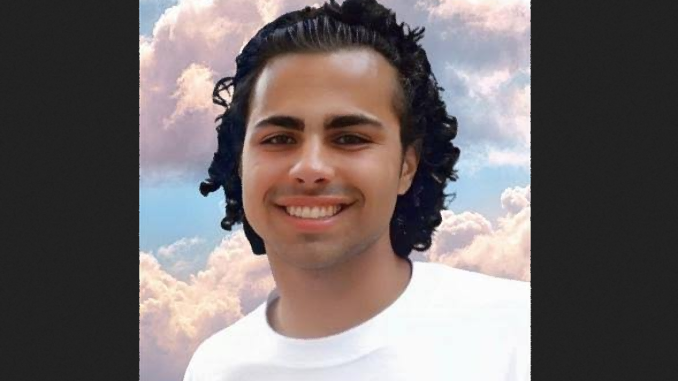
Kiano Vafaeian should be alive. Claire Elyse Brosseau is alive. In Canada, that difference may have less to do with a clear medical standard than with geography.
The Canadian pro-euthanasia movement has spent years assuring the public that their Medical Assistance in Dying [MAiD]came with safeguards. Including: two independent assessors and that the person asking for death be facing grievous and irremediable suffering. They promised that mental illness alone was to remain excluded. The promise was simple: vulnerable people would be protected, and despair would not become a channel to death.
Then came Kiano.
Kiano was born March 14, 1999. He died December 30, 2025, at 26, in a Vancouver funeral home. He had lived with Type 1 diabetes since childhood and later suffered vision loss, neuropathy, depression, ADHD, plus the lingering effects of a serious car crash. Those burdens should have made him someone medicine fought harder to protect.
Instead, they became part of the case for helping him die.
In September 2022, at only 23, a Toronto clinician approved Kiano for MAiD. His mother, Margaret Marsilla, discovered the scheduled date, went public, and fought to stop it. The approval collapsed. In November 2023, Ontario doctors again declined him because his death was not reasonably foreseeable. For a moment, the safeguards appeared to work.
But Kiano kept looking.
In December 2025, he flew to British Columbia, and on the 11th of that month, he filled prescriptions in Vancouver for the drugs that would be used to end his life, prescribed by Dr. Ellen Wiebe, a prominent MAiD provider. Nineteen days later, he died at Koru Cremation. He paid for the drugs, and he paid for the room.
His family had no idea he was doing this.
Imagine being his mother. She had already fought once to save her son. Doctors in Ontario had refused to help him die. Then he crossed a provincial line, found another doctor, and was dead before the year ended. Margaret later said a doctor had found a loophole and taken her son.
Whatever official language Canada uses, the human truth is harder to hide. A mother buried her 26-year-old child after a medical system finally agreed to do what every suicide-prevention campaign tells desperate people must never happen: accept death as the answer.
Claire’s story runs in the opposite direction.
Claire Elyse Brosseau is 49 and lives in Toronto with her dog. A former actress and comedian, she has lived for decades with bipolar I disorder, PTSD, an eating disorder, and substance-use disorder. Her suffering is real. That should invite compassion, treatment, patience, and protection. It should not make death more reasonable.
Two clinicians reportedly concluded that Claire would meet Canada’s Track 2 criteria if the exclusion for mental illness did not exist. She expected the law eventually to expand to psychiatric conditions, but Ottawa delayed that change. She went to court instead.
In May 2026, Claire asked an Ontario judge for an emergency exemption that would allow a doctor to end her life immediately. On September 3, Justice Carissima Mathen refused. The judge acknowledged her suffering but held that an emergency motion could not lift the statutory prohibition.
So Claire is alive, for now. Canadian Courts are continuing their review.
Now, set the two lives side by side and Canada’s safeguards begin to look disturbingly arbitrary. Kiano wanted to die. Ontario said no. He traveled to British Columbia and found a doctor who said yes. Claire wants to die. She remains in Ontario, where the law still says no. One person is dead. The other continues her legal fight to be allowed to commit suicide.
A safeguard that survives only until someone finds another assessor is not much of a safeguard. It becomes a search: another doctor, another interpretation, another jurisdiction, another chance to hear yes.
This is what pro-life advocates warned about when Canada expanded MAiD beyond cases in which death was reasonably foreseeable. The language always sounds controlled at first. Strict eligibility. Independent assessment. Capacity. Intolerable suffering.
But then depression, disability, chronic pain, fear, and isolation enter the room, and the question quietly changes. Instead of asking, “How do we help this person live?” the system begins asking, “Does this person’s suffering qualify for death?”
That change is profound.
Kiano did not need someone to certify his anguish. He needed someone willing to outlast it. Claire does not need the government to prove that it takes her suffering seriously by arranging her death. She needs a culture willing to tell her that suffering does not erase her worth.
And on September 12, another American state becomes another destination point on this deadly map.
Illinois will cross its own line on September 12, 2026, when Deb’s Law takes effect, and physicians may prescribe lethal drugs to certain people diagnosed with terminal illnesses. Supporters point to safeguards familiar to anyone who watched Canada’s progression: two doctors, capacity requirements, self-administration, protections against coercion, and mental-health referrals when judgment is questioned. The Illinois law is narrower than Canada’s current regime, but Canada was narrower once too.
There is no legislative rescue coming before September 12. The votes have been cast, the law has been signed, and Illinois will enter the assisted-suicide experiment. For now, the die is cast.
Somewhere in Illinois, perhaps sooner than anyone expects, a family may find itself where Margaret Marsilla ended up: pleading for more time while a suffering son or daughter has already found a doctor willing to provide death.
That is the future Illinois has chosen. Canada has already shown us what it can look like.












Be the first to comment