
Article By David Lindfield
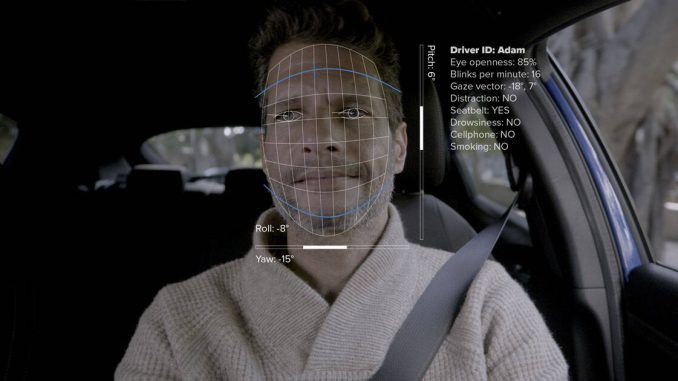
Michigan is preparing to test a new road-funding system that could use GPS, smartphones, and technology embedded in vehicles to track residents as they drive.
Officials say the technology aims to record how many miles people drive, raising concerns that a future mileage tax could transform ordinary driving into another avenue for government surveillance.
The six-month pilot is scheduled to begin in February 2027 with 1,000 volunteers and will test several methods for recording mileage, including odometer readings, vehicle telematics, a plug-in device, and a smartphone app.
The Michigan Department of Transportation (MDOT) says participation will be voluntary and that no permanent mileage charge is currently planned.
Any statewide system would require lawmakers to approve new legislation.
But the prospect of the state eventually using technology capable of recording drivers’ movements is already setting off privacy alarms.
GPS “can get you within two meters reliably today,” John Peracchio, a State Transportation Commission appointee involved in designing the pilot, said.
Michigan’s own 2024 survey of more than 19,000 residents found that over 30% were concerned about data privacy, while 17% said they would refuse to provide their mileage information.
Republicans Warn of Government Tracking
Michigan Senate Republican Leader Aric Nesbitt blasted the proposal, warning that families should not be forced to surrender more information about their movements so the government can extract additional money from them.
“Michigan families are already struggling to afford everyday life, and the last thing they need is state government tracking their every move just to take more of their hard-earned money,” Nesbitt said.
“Instead of coming up with new ways to reach into drivers’ pockets and invade their privacy, Democrats need to end their corporate welfare and root out wasteful spending to fix our roads.”
Democrat Gov. Gretchen Whitmer’s office did not respond to a request for comment.
Whitmer is scheduled to leave office on Jan. 1, one month before the pilot begins.
The broader concern is not simply whether Michigan collects mileage information during a voluntary trial. It is what happens if the infrastructure eventually becomes the foundation for a mandatory pay-per-mile tax.
James Czerniawski, head of emerging technology policy at the Consumer Choice Center, drew a sharp distinction between voluntarily giving location information to a private business and being required to provide it to the government.
Drivers can abandon an insurer or automaker that abuses their trust, he noted.
“You can’t swap providers when driving on a public road,” Czerniawski said.
Warning of a ‘Transportation Surveillance State’
Czerniawski said Michigan drivers should demand answers about precisely what information the technology would collect.
That includes whether vehicle telematics would record speed and braking information in addition to location, whether law enforcement or third parties could obtain the data, how long records would be retained, and whether a system introduced as voluntary could eventually become mandatory.
Governments searching for alternatives to declining gasoline-tax revenue “must avoid mandatory solutions that subject their drivers to a transportation surveillance state,” Czerniawski warned.
Privacy advocates are also warning that information collected for one government purpose has a habit of finding additional uses later.
Alex Marthews, national chair of Restore the Fourth, pointed to federal agencies obtaining access to IRS records, Selective Service information, and voter rolls originally gathered for other purposes.
The constitutional implications have become particularly significant following the Supreme Court’s June ruling in Chatrie v. United States.
The court ruled that police conduct a Fourth Amendment search when they obtain cellphone location history from a technology company, even when the records cover only two hours.
Marthews called Michigan’s current pilot design “constitutionally perilous.”
“Even short-term location information, like a single ALPR [automated license plate reader] snapshot, or a single reading seized as part of the Michigan pay-by-mile pilot, can potentially reveal a person’s activities, preferences, habits and beliefs,” he said.
“Elected officials can no longer fairly rely on an assumption that a sweeping system of collecting and parsing all drivers’ location records will not violate the Constitution.”
GPS Not the Only Option
Michigan’s pilot does not require participants to surrender location information.
An odometer-based option would record only the total number of miles traveled without revealing where or when a person drove.
“Nobody would know when you’re driving, where you’re driving, how you’re driving,” Reason Foundation transportation policy expert Baruch Feigenbaum said.
“They would just know that you drove a certain number of miles.”
Czerniawski described that approach as “certainly the most privacy-preserving way to go.”
Hawaii already uses an odometer-based system for electric vehicles, allowing owners to choose between a $50 annual charge or $8 per 1,000 miles, capped at $50. Odometers are photographed during annual safety inspections.
Electronic Frontier Foundation Legislative Director Lee Tien similarly argued that Michigan does not need to collect drivers’ movements to establish a mileage-based system.
“Safeguarding location data is the key, and zero-location approaches like odometer readings and periodic payments are workable,” Tien said.
Michigan Could Tap Cars and Smartphones
Other options being considered are considerably more sophisticated.
Peracchio said Michigan could “leverage the embedded telematics” already installed in most newer vehicles.
Another possibility is “to leverage a smart device like an iPhone, and to marry that data up with information about your vehicle,” he said.
Under the telematics and GPS options, a private vendor rather than Michigan itself would hold location records, according to Feigenbaum.
“It would be a private vendor,” he said.
“It would not be the state of Michigan that’s tracking it.”
But handing sensitive location information to a contractor does not eliminate questions about who can ultimately obtain it.
Feigenbaum said Michigan should require a warrant before law enforcement can access the information.
“The idea is that if you are the owner of that vehicle, the driver of that vehicle, that is your data,” he said.
Backlash against Automated Tracking Grows
Michigan’s experiment arrives as Americans are increasingly pushing back against another rapidly expanding vehicle-surveillance technology: automated license plate readers.
Florida recently ordered Flock Safety cameras removed from state highways after Republican Gov. Ron DeSantis said he did not want Florida becoming a “surveillance state.”
Rep. Lauren Boebert (R-CO) has similarly warned that fixed license plate readers are “quietly turning American streets into zones of constant monitoring.”
Michigan residents are already voicing similar concerns.
“I don’t really like the idea on tracking,” Grand Rapids driver Yosef Gage said.
“I don’t think that they need to track every mile and everywhere I go,” another driver, Liz Cook, said.
“They basically do that already with all the cameras everywhere.”
Michigan officials insist the upcoming trial remains voluntary.
The bigger question will come later.
If lawmakers eventually decide to replace gasoline taxes with a mandatory mileage charge, they will have to decide whether Michigan merely needs to know how far residents drive, or whether the government and its contractors should be given the technological infrastructure to know where they went as well.












Be the first to comment