
Article By David Lindfield
Researchers have uncovered remarkable evidence that ancient microbes may still be lingering inside the preserved remains of Ötzi the Iceman, a 5,300-year-old mummy whose body continues to reveal new secrets more than three decades after its discovery.
The findings, published in the journal Microbiome, suggest that traces of ancient microorganisms have survived for thousands of years within the famous mummy, providing scientists with a rare window into the microbial world of prehistoric humans.
Ötzi’s remarkably preserved remains were discovered in 1991 by hikers in a glacier high in the Alps.
Researchers later determined that he lived around 3300 B.C., making him older than both Stonehenge and the Egyptian pyramids.
Ancient Microbial Community Preserved for Millennia
Scientists from Eurac Research examined Ötzi’s remains and found evidence of both ancient and modern microorganisms living within and on the mummy.
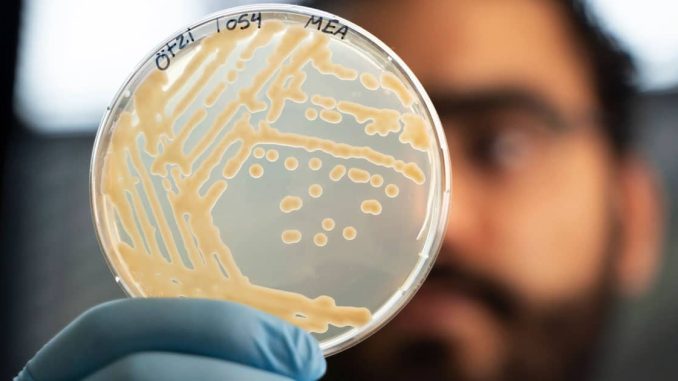
Among the most significant discoveries were genetic traces of bacteria from Ötzi’s original gut microbiome, along with cold-adapted yeast species believed to have originated from the surrounding glacial environment.
Researchers analyzed samples collected from ice on the surface of the body, meltwater within the mummy, tissue samples, swabs, and previously collected stomach and intestinal material.
The study allowed scientists to distinguish between microorganisms that existed during Ötzi’s lifetime and those that colonized the body after death.
According to researchers, some of the microbes may have remained in a dormant state for more than 5,000 years.
Rare Window Into Human History
The research team noted that Ötzi’s microbiome differs significantly from that of modern humans.
Scientists identified gut bacteria that are rarely found in people today, offering what researchers described as an extraordinary glimpse into humanity’s distant past.
“Ötzi therefore offers a rare glimpse into humanity’s microbial past,” Eurac Research said in a statement.
One of the most surprising findings was the continued presence of cold-loving yeast species that appear to have survived on the mummy throughout its centuries encased in ice and during its preservation in a museum environment.
Frank Maixner, director of the Institute for Mummy Studies at Eurac Research, said the findings suggest certain microorganisms have remained associated with the mummy throughout its long history.
“These yeasts have accompanied Ötzi on his long journey through the millennia,” Maixner said.
He added that Ötzi is “not a static relic, but a dynamic biological system.”
Mystery Still Surrounds Microbial Survival
Despite the breakthrough, researchers acknowledge that many questions remain unanswered.
Scientists still do not fully understand how some microorganisms have managed to survive and interact within the frozen remains for such an extraordinary period of time.
“The conditions are not yet fully understood,” conservation expert and study co-author Marco Samadelli said.
“This study expands our knowledge in this area.”
Ötzi is currently housed at the South Tyrol Museum of Archaeology in Bolzano, Italy, where his preservation is closely monitored.
Museum director Elisabeth Vallazza said the mummy remains in stable condition.
“Close microbiological monitoring ensures that the mummy suffers no damage,” Vallazza said.
She added that ongoing research and conservation efforts will be necessary to preserve the ancient remains for future generations.
Ötzi Continues to Yield New Discoveries
The latest findings add to decades of scientific research surrounding one of the world’s most famous mummies.
Since his discovery, researchers have uncovered extensive details about Ötzi’s life, diet, health, and death.
While early theories suggested he may have died from exposure while crossing the Alps, later examinations revealed an arrowhead lodged in his shoulder, leading scientists to conclude he likely died after being wounded in an attack.
The discovery of ancient microbes inside the mummy adds another chapter to the story of a man who died more than five millennia ago but continues to provide valuable insights into the ancient world.
The findings also come amid a growing number of archaeological discoveries involving ancient remains, including recent announcements regarding mummies found in Egypt and Peru that continue to shed light on early human civilizations.












Be the first to comment