
Article By Anugrah Kumar
Christian women and girls in northern Nigeria and the country’s Middle Belt face heightened violence from armed militant groups, including abductions, sexual violence, forced conversion and forced marriage, according to concerns raised by United Nations experts in a formal communication to the Nigerian government.
The communication was issued jointly by the special rapporteurs on violence against women and girls, on extrajudicial, summary or arbitrary executions, on minority issues, and on torture, along with the U.N. Working Group on Enforced or Involuntary Disappearances.
They gave the Nigerian government 60 days to respond, after which the full text of the communication will be made public, legal advocacy group ADF International reported.
The experts cited a pattern of violence and persecution disproportionately affecting Christian communities in some northern states, pointing to an elevated risk of religiously motivated attacks by radical Islamist militias and an increased threat of sexual violence against women and girls.
Northern Nigeria has a Muslim majority, with the south predominantly Christian, though the two faiths are present in significant numbers across both regions. The Middle Belt sits between these two zones and is religiously the most mixed, though with a Christian majority, according to some estimates.
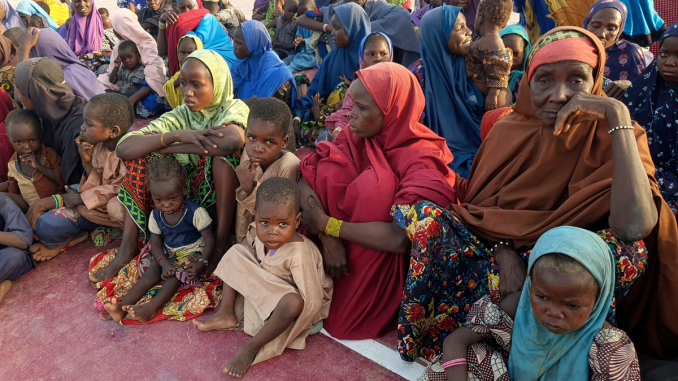
The experts said the risk for Christian women and girls is especially high, citing cases in which they have been abducted, subjected to sexual violence, forced conversion and child marriage, or attacked for rejecting a forced marriage arrangement. Christian women and girls face particular vulnerability inside camps for internally displaced people, the experts said.
Nigeria hosted an estimated 8.18 million internally displaced people as of June 2025, one of the largest displaced populations in the world, according to a UNHCR situation report.
Displacement has been driven by violence involving Islamist militant groups such as Boko Haram and the Islamic State West Africa Province (ISWAP), as well as attacks by armed Fulani militants and other armed groups.
The experts said Nigeria has failed to meet its international human rights obligations on freedom of religion, safety, liberty and the rights of women and children. They also pointed to the enforcement of blasphemy codes and local applications of Sharia law in some states as factors contributing to violence against non-Muslims. They urged Nigerian authorities to investigate alleged violations, act on them and protect victims and those still at risk.
Giorgio Mazzoli, director of U.N. advocacy at ADF International, said Christians, particularly women and girls, among other religious minorities, have faced grave and systematic atrocities at the hands of armed militant groups operating with impunity in parts of Nigeria.
“For too long, the international community has remained largely silent as this crisis has deepened,” Mazzoli said. “The joint communication from five U.N. mechanisms is a significant and welcome step towards ensuring that these violations receive international attention, and that their root causes — including discriminatory legal frameworks — are fully addressed.”
ADF International said the communication follows several cases it has supported, including that of Rhoda Jatau, a Christian mother who was fully acquitted in December 2024 after 19 months in prison over allegations that she shared a video deemed blasphemous, condemning the lynching of Christian student Deborah Emmanuel Yakubu.
ADF International is also supporting the legal defense of Sufi musician Yahaya Sharif-Aminu before the Supreme Court of Nigeria.
Sharif-Aminu was imprisoned for more than five years and had previously been sentenced to death over a WhatsApp message deemed blasphemous. Following his first hearing in September, a Nigerian state lawyer threatened to publicly execute him for sending a song on WhatsApp, and he is awaiting a further hearing date.
The U.N. communication echoes findings from Open Doors, a Christian ministry that supports persecuted Christians worldwide and publishes the annual World Watch List. The group said last year that five years of research from 2019 to 2024 identified forced marriage, sexual violence, physical violence, psychological violence and abduction as the most common forms of persecution faced by Christian women and girls, often experienced together.
Citing Amnesty International figures, the ministry said more than 1,700 children had been abducted in Nigeria in the decade since the kidnapping of 276 girls from a school in Chibok, and that at least 2,830 people were kidnapped in Nigeria during the 2025 World Watch List reporting period, the highest number of faith-related kidnappings of any country.
The vulnerabilities faced by Christian women in Nigeria and elsewhere were also raised at a panel during the World Evangelical Alliance’s 14th General Assembly in Seoul, as The Christian Post previously reported.
Irene Kibagendi, executive director of the Pan African Christian Women Alliance, an advocacy network, said that women who flee captivity often face rejection from their churches on return, sometimes because they come back pregnant or with children fathered by militants from groups such as Boko Haram or al-Shabaab.
Emma van der Deijl, chief executive of Gender and Religious Freedom, said at the assembly that churches had a responsibility to restore victims with love and acceptance.












Be the first to comment