
Article By Frank Bergman
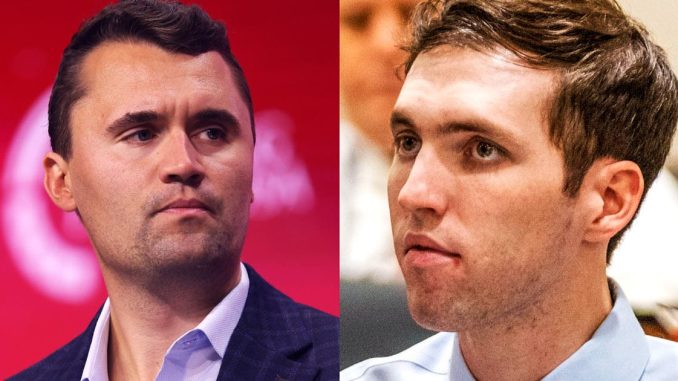
A stunning new court filing is raising serious questions about the prosecution’s case against Tyler Robinson, the man accused of murdering Turning Point USA founder Charlie Kirk.
According to the filing, the bullet recovered from Kirk’s body cannot be matched to the rifle allegedly used in the killing.
The revelation that could blow a major hole in the state’s core narrative.
Forensic Evidence Under Scrutiny
Robinson, 22, is facing capital murder charges and a potential death sentence following the September 10 shooting at Utah Valley University.
But his defense team now says federal analysts were unable to tie the fatal bullet to the weapon prosecutors claim he used.
The filing states that the Bureau of Alcohol, Tobacco, Firearms, and Explosives (ATF) “was unable to identify the bullet recovered at autopsy to the rifle allegedly tied to Mr Robinson.”
That alone introduces a major evidentiary gap, but it doesn’t stop there.
Defense attorneys also revealed:
• Multiple DNA samples were found on key pieces of evidence
• Federal forensic reports require extensive expert review
• Crucial forensic case files have not yet been provided to the defense
The team warned that analyzing the DNA mixtures and validating federal procedures will require specialists across multiple disciplines, including forensic biology and statistical analysis.
Massive Evidence Dump Raises Red Flags
The defense says prosecutors have handed over roughly 20,000 files, including audio, video, and documents, creating a massive backlog that will take “hundreds of hours” to process.
They argue they are still missing critical forensic data needed to properly challenge the state’s case.
At the same time, prosecutors are expected to rely on:
• DNA and ballistic reports
• Social media data
• Testimony from law enforcement and witnesses
• Statements from Robinson’s own family
The defense also flagged concerns about “a significant amount of hearsay” expected to be introduced.
Prosecution Narrative vs. Emerging Doubts
Prosecutors allege Robinson drove three hours to carry out a targeted killing and later attempted to retrieve the weapon.
Text messages cited in court documents show the suspect discussing:
• Trying to recover the rifle from a “drop point”
• Concern about fingerprints
• Fear of explaining the missing weapon to his father
Authorities say Robinson was ultimately turned in by his father after the rifle was recognized in released images.
However, the defense’s new claim, that the bullet does not match that rifle, directly challenges the foundation of that narrative.
Political Targeting and Radicalization Concerns
Friends of Robinson told reporters he had made disturbing comments about politicians “catching a bullet” during drunken rants, raising concerns about political radicalization.
Those close to him described a volatile mix:
• Strong anti-government views
• Obsession with firearms
• Increasingly extreme rhetoric
The case has drawn national attention, with President Donald Trump previously stating he hopes Kirk’s killer “gets the death penalty.”
Transparency Fight Intensifies
As the case moves forward, a new battle is brewing over transparency in the courtroom.
The late conservative activist’s widow, Erika Kirk, is demanding full public access to proceedings, stating:
“We deserve to have cameras in there.”
Meanwhile, the defense argues that extensive media coverage has already prejudiced the case.
Sheriff’s Sudden Resignation Raises Questions
Adding another layer of uncertainty, Washington County Sheriff Nate Brooksby, a key figure in Robinson’s arrest, has abruptly resigned after complaints about department operations.
Officials say:
• Complaints were raised but not pursued
• Brooksby disputed the allegations
• He chose to step down after 30 years in law enforcement
There is no confirmed link between his resignation and the case, but the timing is notable.
Key Question Moving Forward
With the ballistic evidence now under serious dispute, the central question becomes unavoidable:
If the bullet cannot be tied to the alleged weapon, what does that mean for the prosecution’s case?
Robinson is due back in court April 17, where both sides will battle over evidence, procedure, and increasingly, the credibility of the case itself.













Be the first to comment