
Original Article By Frank Bergman
The globalist push to eliminate meat and dairy just notched another victory in the War on Food, this time in the heart of America’s cattle country.
Tyson Foods has announced it will shut down one of the largest beef plants in the United States after cattle supplies plunged to the lowest levels seen in nearly 75 years.
The plant is a massive facility in Lexington, Nebraska, employing roughly 3,200 people.
The closure takes effect in January, delivering a major blow to the U.S. beef supply at the exact moment globalist policymakers, ESG investors, and anti-livestock activists are accelerating their war on meat.
Tyson is also scaling back operations at its Amarillo, Texas, plant, reducing it to a single full-capacity shift and affecting another 1,700 workers.
“Tyson Foods recognizes the impact these decisions have on team members and the communities where we operate,” the company said in a statement, offering little in the way of an explanation beyond “tight supplies.”
But the truth is obvious to anyone paying attention: this crisis didn’t appear out of thin air.
It is the predictable result of years of pressure on America’s livestock industry, from forced herd reductions to climate mandates to skyrocketing feed costs.
Decades-High Meat Prices, Forced Herd Slaughter
Beef prices have shattered records this year, the predictable consequence of a collapsing cattle supply and aggressive competition among processors.
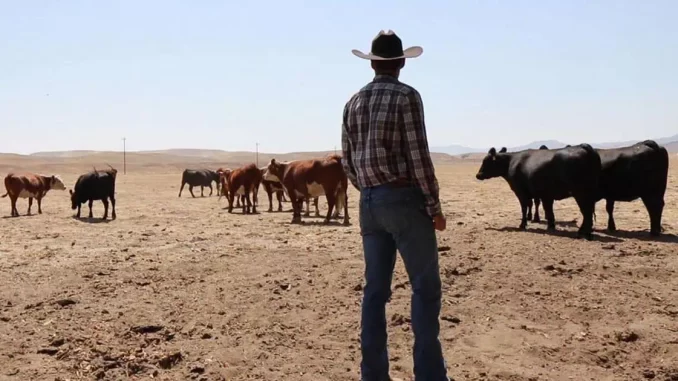
Ranchers nationwide were forced to cull herds after years of drought torched grazing lands and drove feed prices through the roof.
Some have begun rebuilding, but raising full-grown cattle takes two years or more.
However, it is time America no longer has as the supply chain continues to fracture.
President Donald Trump said last month that he is working to bring down beef prices and has accused major meatpacking companies of collusion and price manipulation.
He has also ordered the Justice Department to investigate.
Tyson’s own books show the carnage:
- $426 million in adjusted losses this past fiscal year,
- $291 million in the year before,
- and a projected $400–$600 million loss in 2026.
Industry experts say they expected a closure eventually, but not this soon.
“We all expected a plant to be closed at some point in 2026,” said Rich Nelson of Allendale.
“I’m a little surprised they’re doing it preemptively.”
The Lexington plant processes roughly 5,000 cattle per day, about 5% of all U.S. slaughter, and has already been operating below capacity.
Its shutdown will devastate the city of 10,000 residents and cripple nearby feed yards.
“Tyson’s announcement will have a devastating impact,” Sen. Deb Fischer (R-NE) warned.
“It’s no secret that just a few years ago, packers like Tyson were making windfall profits while the rest of the industry was continuously in the red.”
Global Elites Want Less Beef
This collapse is not a coincidence, however.
It follows years of escalating global pressure:
The World Economic Forum (WEF) openly promotes a transition away from beef to “alternative proteins.”
Environmental regulators and globalist-aligned lawmakers in the U.S., Canada, and Europe have pushed methane restrictions and emissions caps on cattle producers.
Governments worldwide have floated cow taxes, herd limits, and livestock reductions.
Billionaire-backed think tanks demand Americans replace beef with insects, lab-grown meat, and plant-based substitutes.
The results are now reaching American dinner tables and American workers.
Tyson’s Nebraska plant is just the latest casualty in a food system being deliberately destabilized in the name of globalism.
Consumers Will Pay the Price
The Amarillo reduction is another hit to the domestic protein supply.
That plant slaughters approximately 6,000 cattle per day.
With both facilities cut back, the cost of beef, already surging, is poised to soar even higher.
Tyson says it will “increase production at other facilities,” but U.S. cattle numbers simply aren’t there.
When supply is shrinking, and global elites are celebrating the decline of livestock agriculture, “increasing production” becomes a political slogan, not a realistic strategy.
Global War on Food Is No Longer Hidden
From Europe’s farmer uprisings, to Canada’s fertilizer mandates, to the Biden-era regulatory pressure on American ranchers, one pattern is unmistakable:
The war on meat is real, coordinated, and accelerating.
And Tyson’s plant closure is not a blip; it is a warning.
The U.S. cattle industry is being weakened, consolidated, and starved at the exact moment when global forces are pushing aggressively for a “post-meat future.”
If America doesn’t reverse course, this won’t be the last major meat plant to shut its doors.
It will just be the one we remember as the turning point.


Be the first to comment