
Article By Ken Macon
A million faces later, the case for calling this a success is doing some heavy lifting.
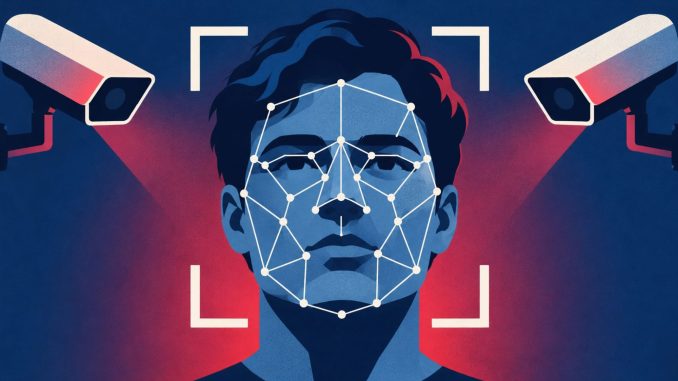
Western Australia (WA) Police have completed a five-month trial of a facial recognition system that was carried out from 43 locations across the state, and scanned 1.38 million faces, to produce 122 arrests.
Meanwhile, in New South Wales (NSW), the City of Sydney is moving to introduce AI on its street cameras, while the University of Sydney wants to use facial recognition on campus.
While the WA police say their trial was a success, civil rights activists say that the technology was used with no reasonable suspicion whatsoever and that the low number of arrests, compared to the number of people scanned, makes the exercise an example of mass surveillance.
The WA trial, which ran from June 22 to October 31, involved marked vans used in 100 deployments in the state, both in metropolitan and regional areas, scanning people’s faces.
When the numbers are flipped, they show that about 99.98% of the people scanned never triggered an alert, and about 99.991% were not arrested. Nine of the 292 alerts, about 3%, were wrong.
The 0.00065% figure is arrived at by dividing the number of false matches by the total number of people scanned, but Bill Rowlings of Civil Liberties Australia said this was the police “severely gilding the lily.”
“We will only know what the incorrect rate is when the 122 people arrested have their day in court,” he said, adding that the scans were done “with no reasonable suspicion whatsoever.”
The police’s own privacy impact assessment reveals that “individuals cannot opt out of being captured by CCTV if they decide to walk through the OLFR zone.”
Once the system had wrongly flagged someone, that person was stopped and questioned by the police, with Commissioner Col Blanch saying, “No one was arrested. No one made a complaint. Each one did result in an interaction with that person and asking them relevant questions.”
Sarah Schwartz of the Human Rights Law Centre said that every false match is “a real person who may be stopped, questioned or investigated because an algorithm got it wrong.”
Schwartz questioned whether “biometric surveillance on an extraordinary scale” was “proportionate in a democratic society,” and wondered what safeguards there were in place to prevent the technology from being used to track people at public demonstrations.
“WA police have provided remarkably little detail about the safeguards governing this technology,” she said.
The police said that images of people who were not on the list of those wanted or of interest were “pixelated in real time and deleted.”
The marked vans are now off the streets as the police evaluate the trial, and the commissioner said that the technology was “not perfect” and that they “knew this going into this trial.”
However, the state’s information commissioner warned in July of “collective privacy harms” from the use of facial recognition, saying that “people often adjust their behaviour and speech if they feel like they are being watched.”
The commissioner flagged “scope creep,” such as the covert use of the technology, or its deployment via existing CCTV cameras.
In Sydney, the City Council has approved a draft code for its street camera program, that will be open to public exhibition. The document is about the use of 100 cameras in the central business district.
The plan is to use AI to alert operators to a number of scenarios, such as unattended or removed objects, direction of travel breach, and abnormal behavior, such as a crowd suddenly gathering or running.
The system will have a search tool to sort people by male or female, adult or child, clothing color, hair color, whether they carry a backpack or bag.
The draft rules out the use of facial recognition, and the city says “the tool will not be used to generally scan the CCTV footage.”
However, the period during which footage will be kept is being extended from 28 to 30 days, while access to the material will be given to more law enforcement and intelligence authorities, including ASIO. Internal audits of the program will now be conducted every four years, instead of every two.
As for the University of Sydney, its draft video surveillance policy, which was opened to public comment in October, reveals that it wants to use facial recognition, and have a watch list of people who will be identified and located on campus using this technology.
A spokesperson said that facial recognition will be used in limited cases, “generally related to ongoing theft or specific threats of violence,” but the student council’s Lucas Pierce said, “It’s like 1984.”
The draft policy says that cameras can be used “including during demonstrations” and that body-worn camera recordings can be given to the police.
The university regulator, TEQSA, in November 2025 told universities to “Consider the necessity and effectiveness of security personnel wearing body worn cameras” – this followed the 2024 pro-Palestine encampments.
Meanwhile, Reclaim The Net reported in October that a facial recognition trial carried out by the British Transport Police in London had scanned 926,912 people and produced zero arrests – but was extended anyway.
In NSW, driver’s license photos are being fed into the national facial recognition system.
Australia seems to be building a habit of using these technologies, one trial at a time. While each may not be a large-scale deployment, together they add up to a growing web of surveillance that is increasingly difficult to untangle.












Be the first to comment