
Article By David Lindfiel
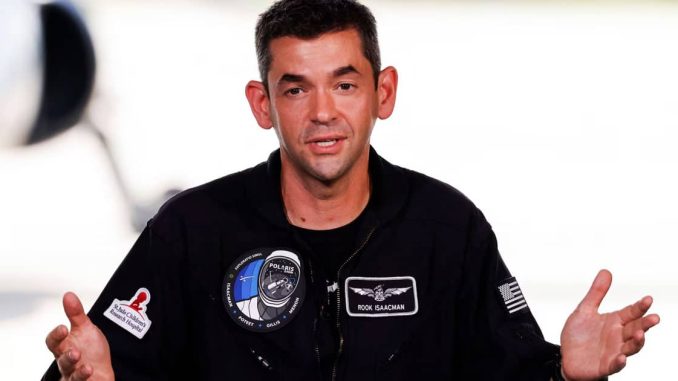
NASA Administrator Jared Isaacman is doubling down on plans to return American astronauts to the Moon in 2028, before President Donald Trump leaves office, while cutting through the bureaucracy that has slowed the agency’s ambitions.
Speaking at Kennedy Space Center last week, Isaacman reaffirmed plans to launch Artemis III next summer, followed by a lunar landing on Artemis IV in 2028.
The missions would lay the groundwork for an even more ambitious objective: establishing a base near the Moon’s south pole.
Isaacman said NASA is accelerating its work by reducing meetings, “bureaucratic inertia, and endless deliberation,” according to The Associated Press.
Isaacman Invokes Apollo’s Rapid Progress
Isaacman rejected the idea that restoring NASA’s momentum requires importing a fashionable corporate formula.
The agency’s strength would not come from “tech industry pixie dust or some new management philosophy,” he said.
“It’s about our own history,” Isaacman continued.
“It’s a playbook this agency knows really well, the same playbook that went from Apollo 7 splashdown to Apollo 11 in just nine months.”
His message places execution at the center of NASA’s lunar push: recover the urgency that once took American astronauts to the Moon rather than allow deliberation to become a substitute for progress.
The upcoming missions, however, must demonstrate capabilities essential to making that return possible.
Artemis III Will Test Docking Before Lunar Landing
Artemis III will not land astronauts on the Moon.
Instead, the mission will practice docking in Earth orbit with a lunar lander developed by SpaceX or Blue Origin.
NASA has not finalized which vehicle will conduct the landing.
Artemis IV is scheduled to carry astronauts to the lunar surface in 2028 for a week of scientific work, marking humanity’s first Moon landing in more than half a century.
A successful landing would precede plans for a permanent lunar presence.
The proposed base would be located near the south pole.
It’s a substantially different destination from the equatorial regions visited during Apollo.
Building and sustaining that outpost would require capabilities beyond those demonstrated by the earlier missions.
Starship Readiness Remains Major Hurdle
SpaceX’s Starship is among the vehicles selected to support NASA’s lunar plans.
However, significant technical work remains.
The rocket recently completed its first orbit around Earth.
That flight had been intended to circle the planet six times but ended early following an engine failure.
SpaceX must also demonstrate capabilities including refueling in space, a critical step for its lunar architecture.
Those challenges make the schedule demanding.
The docking exercise and subsequent landing depend on hardware reaching the required level of readiness.
NASA astronaut Frank Rubio, selected for Artemis III, acknowledged the scale of the undertaking while expressing confidence in American capability.
Rubio told The Associated Press:
“It is incredibly ambitious.
“One thing I’ve always believed and learned is don’t bet against America.”












Be the first to comment