
Article By Saba Heidarkhani
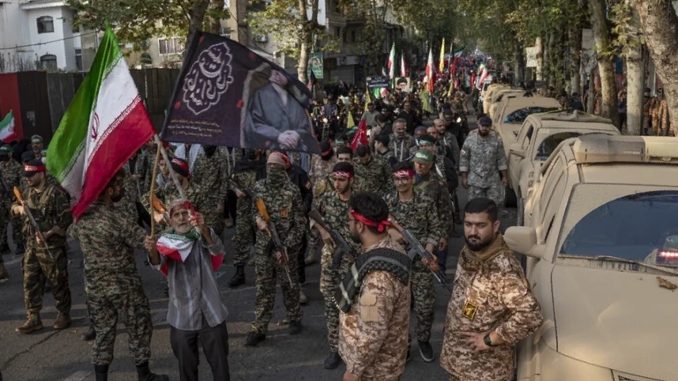
Armed security forces and checkpoints have become more visible across Iran, according to witness reports sent to Iran International, while internet access has deteriorated amid fears of fresh unrest and another round of war.
Accounts from Tehran, Mashhad, Isfahan, Dezful, Hamedan and other cities over the past week describe armed Basij members and riot police at major intersections and public squares, new checkpoints and additional surveillance cameras.
Users in several provinces also say internet speeds have fallen sharply, circumvention tools have stopped working and access to social media has become increasingly difficult.
The individual reports cannot all be independently verified, but describe similar changes across widely separated parts of the country.
More armed forces on the streets
In Dezful in southwestern Iran, one resident said the city had become “heavily securitized,” particularly around the city center and Shariati Street.
The resident attributed the increased presence to government concern about possible protests around the anniversary of the November 2019 uprising, when demonstrations triggered by a sudden increase in fuel prices were met with a deadly crackdown.
In Tehran, a resident reported a Basij checkpoint on Khavaran Street from Thursday evening, while other accounts described increased security patrols elsewhere in the capital and neighboring Karaj.
Residents of Mashhad reported armed Basij members around Mellat Park.
In Isfahan, armed deployments were reported around major squares, while residents of Hamedan and Borujerd described increased security activity.
Iran International reported similar deployments in September around the fourth anniversary of the death in custody of Mahsa Jina Amini.
More cameras and surveillance
Residents have also reported an expansion of surveillance infrastructure.
A resident of Astara, a small city on the Caspian coast near the Azerbaijani border, said security cameras were being installed in squares and neighborhoods across the city.
“They are installing cameras neighborhood by neighborhood in a city this small,” the resident said. “Look how afraid they are of the people.”
Another resident reported more surveillance cameras around Tehran’s Sadeghieh district.
Tehran municipality announced last year that it planned to install 15,000 surveillance cameras across the capital, while security agencies have used camera footage to identify protesters and enforce government restrictions.
Internet slowdown
Residents in Semnan, Shiraz, Tabriz, Kerman, Tehran and elsewhere told Iran International that connections had slowed markedly, VPNs had stopped functioning and social media platforms had become increasingly difficult to reach.
A Shiraz resident said internet access had been extremely slow for about six days, while in Kerman one user said even paid VPN services were failing.
A resident of Tonekabon on the Caspian coast said Irancell mobile internet was being cut at night. Other users reported disruption to both fixed and mobile connections.
The cause of the disruptions is unclear, and the accounts do not establish that the security deployments and deteriorating internet access are part of a coordinated operation.
But they come against the backdrop of Iran’s extensive use of internet shutdowns during periods of political unrest and conflict.
Tech outlet Zooman reported this week that authorities had issued instructions for international internet access to be cut immediately in the event of another war.
When Israel and the US attacked Iran in February, authorities imposed a nationwide internet blackout that lasted about 88 days, the longest recorded in any country, according to NetBlocks.
The latest disruptions also coincide with sharp increases in the cost of getting online.
Iran’s two largest mobile operators, Hamrah-e Aval and Irancell, raised prices for calls, text messages and internet packages by as much as 40% on Friday, citing higher equipment, maintenance and infrastructure costs.
“By making the internet more expensive, they have closed our last route to the free world,” one resident told Iran International. “For me, when the internet was my only comfort and source of income, even being present in this space is no longer possible.”












Be the first to comment