
Article By Frank Bergman
China and Russia held a secretive infectious-disease preparedness exercise in Fuyuan, including a simulated imported-plague scenario, just weeks before the deadly Russian outbreak.
A warning about possible lockdowns in northeastern China is circulating weeks after Chinese and Russian officials conducted a joint exercise simulating an imported plague outbreak.
The drill was attended by the director of the Russian institute now at the center of a deadly disease scare.
The development comes as Russia faces mounting cover-up questions over a laboratory worker’s death, reports of a second fatality, hospital lockdowns, and the disappearance of outbreak warnings from public view.
Darya Shipilova, 28, died of suspected plague on October 2 after developing a severe illness while working at the Irkutsk Anti-Plague Research Institute.
Reports identified suspected plague and a laboratory exposure.
However, Moscow insists she died from pneumonia of unknown cause and denies an outbreak.
Now attention is turning to the cross-border exercise, China’s communications with Moscow, and a Chinese-language warning urging residents to stockpile supplies.
Joint Exercise Simulated Imported Plague
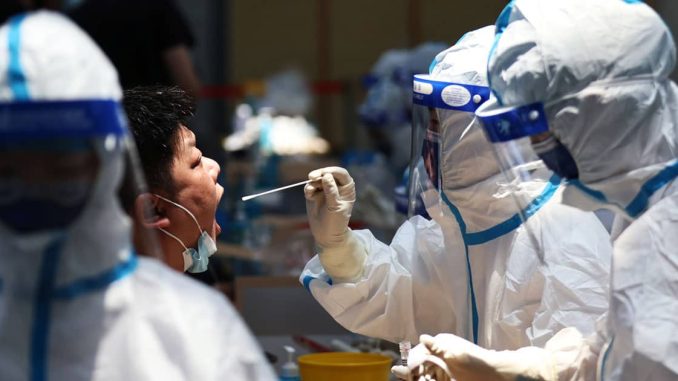
China and Russia held the infectious-disease preparedness exercise in Fuyuan from August 24 through August 27.
According to Fuyuan’s municipal media center, the exercise tested disease notification, risk assessment, and coordinated emergency response across the border.
One scenario specifically involved an imported plague case requiring a joint response.
Two others covered an emerging tick-borne disease labeled “Disease X” and sanitation and emergency medical care after flooding.
Nineteen emergency teams participated, bringing together more than 300 personnel and over 40 vehicles from Heilongjiang, Liaoning, and Jilin.
Russian participants included specialists from Rospotrebnadzor and regional services in Khabarovsk, Primorsky, and Amur.
Sergey Balakhonov, director of the Irkutsk Anti-Plague Research Institute, attended and addressed participants.
His presence directly connects the exercise to the institution where Shipilova worked.
The exercise report described simulated emergencies; it did not identify a connection to her later illness.
China and Russia drilled for plague. Five weeks later, a technician at the Russian institute that took part was dead, and nearly 200 people were put under watch. Officials call it ordinary pneumonia. In late August, the two countries ran a border exercise in Fuyuan on plague brought in from abroad and a new tick-borne disease they called “Disease X.” Sergey Balakhonov, director of Russia’s main plague institute, attended and spoke. Chinese reports say more than 300 people took part. Their research ties go back to about 2014. On 29 September, 28-year-old technician Darya Shipilova was hospitalized in Shelekhov with severe pneumonia. She died early on 2 October. An independent Russian outlet says she broke a tube of plague bacteria on September 25th. Moscow denies it. Officials say tests found no work-related germ and no lab accident. The US said it was monitoring the reports. The drill and the death are documented. The broken tube is not. China and Russia practiced for an imported plague. Then a worker at the participating plague lab died, and the state isolated hundreds of contacts while saying nothing unusual happened.
— UnveiledChina (@Unveiled_ChinaX) October 5, 2026
Chinese Post Urges Residents to Stockpile Supplies
A Chinese-language post from the account @miaowuqvq urged the public to stockpile supplies and warned of possible city lockdowns, particularly in China’s three northeastern provinces.
Those provinces are Heilongjiang, Jilin, and Liaoning.
Heilongjiang borders Russia.
Jilin borders Russia and North Korea, while Liaoning borders North Korea.
🚨🇨🇳 BREAKING: VIRAL WARNINGS SPARK CONCERNS OF POSSIBLE LOCKDOWNS IN NORTHEASTERN CHINA Viral posts circulating on Chinese social media are reportedly urging residents in Liaoning, Jilin and Heilongjiang, the three northeastern provinces bordering Russia, to stockpile food and medical supplies ahead of an alleged imminent city lockdown.
— Anonymous TV 🇺🇦 (@YourAnonTV) October 7, 2026
The post quickly circulated as concern grew over the Russian death and neighboring countries tightened health precautions.
Mongolia, Kyrgyzstan, and Uzbekistan have strengthened border health controls amid the plague reports.
The post quickly circulated as concern grew over the Russian death and neighboring countries tightened health precautions. Mongolia, Kyrgyzstan, and Uzbekistan have strengthened border health controls amid the plague reports.Second Death Reports Vanish
Russian outlets reported a second suspected plague death at Irkutsk district hospital.
Reports were subsequently removed, adding to accusations that authorities are suppressing information about the severity of the situation.
The reported second fatality remains unconfirmed.
Other coverage of the scare also disappeared from Russian media, including Channel 5 and Kommersant.
Independent outlet The Insider said REN TV deleted five publications about plague in the Irkutsk region.
Local authorities issued a warning of their own, then withdrew it.
“Due to unofficial information about a confirmed case of plague in a person in the city of Shelekhov, we ask you to limit visits to Shelekhov and nearby settlements until the circumstances surrounding this threat are clarified,” Baikalsk’s city administration wrote on Telegram.
The post disappeared two hours later, according to Lyudi Baikala.
The Kremlin instructed the public to rely on its health watchdog.
“One should rely on official statements from Rospotrebnadzor rather than listening to various rumors and speculation,” spokesman Dmitry Peskov said.
Hospitals Locked Down as Moscow Denied Outbreak
The initial response to Shipilova’s death involved roughly 200 contacts being placed in quarantine.
Reports described up to five hospitals operating in epidemic mode, with hundreds of staff and patients barred from leaving.
Lyudi Baikala reported three-week quarantines at City Clinical Hospitals No. 1, No. 3, and No. 10, and the Ivano-Matreninskaya Children’s Hospital.
Relatives of a woman giving birth at an Irkutsk maternity hospital also reported quarantine restrictions.
Shelekhovsky district Mayor Maxim Modin confirmed a “comprehensive set of anti-epidemic measures.”
The inpatient facility where Shipilova was treated was quarantined, and several departments stopped admitting or discharging patients.
The latest Russian update says those restrictions have substantially eased.
According to an October 7 Reuters report, Rospotrebnadzor said 90% of the approximately 200 quarantined contacts had been released.
The agency reported no plague cases among her contacts and said nearly 5,000 laboratory tests had failed to detect dangerous pathogens.
It also maintained that no microorganisms associated with Shipilova’s professional duties were found and insisted there was no epidemic risk.
The agency’s claims have not been independently confirmed, however.
Beijing Confirms Communication with Moscow
China has acknowledged ongoing cooperation with Russia over infectious diseases, including plague.
Asked whether Moscow had informed Beijing about the situation, Chinese Foreign Ministry spokesperson Guo Jiakun said October 6 that the countries “maintain close communication and cooperation in the prevention and control of infectious diseases, including the plague,” according to Bloomberg.
That communication follows the August exercise in which both governments rehearsed a cross-border plague response.
Meanwhile, the World Health Organization is seeking further information about Shipilova’s death, the reasons for the control measures, and reports of a second employee with pneumonia of undetermined cause.
WHO spokesperson Christian Lindmeier described the initial public-health risk as moderate to low for Irkutsk, low for Russia, and very low for the WHO European Region.
The second employee’s reported pneumonia is distinct from the unconfirmed reports of a second plague death.
Russia’s assurances have not resolved the cause of Shipilova’s fatal illness.
The sequence has drawn international scrutiny: a joint plague exercise, a researcher’s death, hospital lockdowns, reports of another fatality, and warnings disappearing from public view.
Now a lockdown warning is circulating in northeastern China, while Beijing confirms plague-related cooperation with Moscow and the WHO continues pressing for answers.












Be the first to comment