
Article By Saman Rahmatian
Soaring food prices in Iran are increasingly reflected in reports of theft, with groceries appearing in cases ranging from first-time shoplifting to warehouse raids and armed robbery.
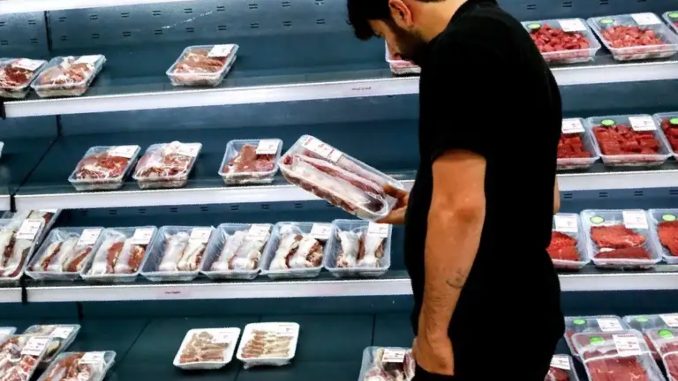
A butcher in Karaj told Iran International that some customers now ask for their meat to be placed in black bags so it does not attract attention.
He described an elderly woman who had just bought meat when a man on a motorbike snatched the bag from her hand, causing her to fall and suffer injuries.
Police and judicial authorities do not publish detailed statistics on food theft, making it impossible to establish its scale or whether such crimes have increased. But basic groceries feature repeatedly in recent media reports of theft.
Some cases appear to involve people with no previous history of crime.
Meat, rice, cream
State news agency IRNA reported the case of a woman caught hiding two tubs of cream under her chador. When stopped by a security guard, she said her children were hungry. Her husband, described as a day labourer, reportedly knew nothing about the theft.
In a review of similar cases, IRNA said some of those accused, including housewives, had no criminal record and were facing theft charges for the first time. Cheese, yoghurt, cream and cooking oil were among the goods being stolen, it said.
The newspaper Jahan-e Sanat has separately reported thefts of cheese, butter and meat from shops.
The reports come as the cost of basic food has risen far faster than overall prices.
According to the Statistical Center of Iran, year-on-year inflation for food and drink reached 127.5 percent in the month to late August, meaning average prices in the category had more than doubled in a year.
Some staples rose considerably faster. Solid vegetable oil increased by more than 383 percent, eggs by nearly 294 percent, chicken by around 177 percent and red meat by 148 percent.
Iranian media reported last month that a kilogram of beef fillet cost around 42.7 million rials, about $19. At that price, one kilogram was equivalent to roughly seven and a half days of earnings at the minimum daily wage of 5.54 million rials, or about $2.50.
Armed robberies
But food is also appearing in crimes that have little apparent connection to immediate hunger, suggesting that sharply higher prices have made groceries more attractive to thieves.
In eastern Tehran, members of a gang who police said confessed to more than 10 house burglaries were stealing rice alongside gold, dollars and coins.
Police have also reported larger thefts, including around 1.5 tons of rice and other groceries from a storeroom in Tehran and approximately 15 tons of rice from a private warehouse in Rey.
Local media reported two armed robberies of shops in Iranshahr, in Sistan and Baluchistan province. In one, attackers took six sacks of rice, around 12 bottles of cooking oil, tinned food and pulses. In another, robbers fired shots before taking rice and cooking oil.
The cases cannot establish that food theft is increasing, nor do they point to a single motive. Shoplifting by someone struggling to feed a family is plainly different from a gang stealing rice alongside gold or raiding a warehouse.
What connects them is the changing value of food after years of inflation, particularly the steep price rises of recent months. Basic groceries have become increasingly difficult for many Iranians to afford — and valuable enough to steal.












Be the first to comment