
Article By Frank Bergman
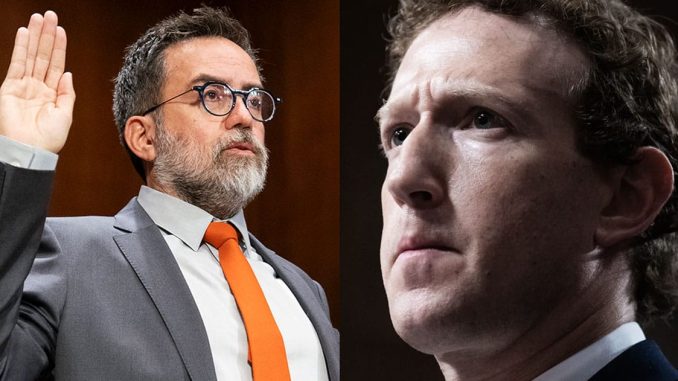
A former Meta safety engineer has blown the whistle on Mark Zuckerberg and other company executives, accusing them of pretending to care about protecting children on Facebook and Instagram while knowingly allowing harmful content to reach young users.
Arturo Béjar, who worked on safety issues inside Meta and personally briefed Zuckerberg, testified in a major California trial that the company adopted what he described as a “don’t ask, don’t tell” approach to child safety.
The case, brought by state attorneys general, is examining Meta’s role in the worsening mental health crisis among children and teenagers using its platforms.
Whistleblower Says Meta Knew Children Were Being Harmed
Béjar testified that Meta executives were aware that Instagram and Facebook were exposing children to violent material, sexual predators, and other harmful content.
Despite that knowledge, he said the company failed to act with the urgency it publicly claimed.
Meta has repeatedly insisted that it “doesn’t prioritize profit over safety.”
However, Béjar told the court that Zuckerberg’s public posture did not match what was happening inside the company.
“I felt that he created a false and misleading impression of Facebook’s commitment to young people,” Béjar testified.
Former Insider Says Meta Exploited Teen Vulnerability
Béjar’s testimony echoes allegations from other former Meta employees.
Last year, former Facebook public policy director Sarah Wynn-Williams published a book describing internal efforts to expand targeted advertising to minors.
According to Wynn-Williams, Facebook developed advertising pitches built around identifying moments when users were especially vulnerable.
One pitch reportedly highlighted emotional states including “worthless,” “insecure,” and “useless.”
Wynn-Williams also said Facebook tracked when teenage girls deleted selfies and used that information to target them with beauty advertising.
That allegation suggests the company was not merely aware of adolescent insecurity but actively exploring ways to monetize it.
Zuckerberg Ignored Personal Pleas
Béjar had previously recounted to Zuckerberg his own daughter’s troubling experiences with Instagram.
However, he said his concerns and warnings went unheeded.
In 2023, Béjar testified to Congress about his personal experience.
“I appear before you today as a dad with firsthand experience of a child who received unwanted sexual advances on Instagram,” he told a panel of U.S. senators.
“She and her friends began having awful experiences, including repeated unwanted sexual advances, harassment,” he added.
“She reported these incidents to the company, and it did nothing.”
In a 2021 note to Zuckerberg, as first reported by The Wall Street Journal, Béjar outlined a “critical gap” between how the company approached harm and how the people who use its products, most notably young people, experience it.
“I don’t think policy/reporting or having more content review are the solutions,” he wrote.
Meta Faces Growing Legal Pressure
The California trial now places those claims under direct legal scrutiny.
State attorneys general are accusing Meta of helping fuel a youth mental health crisis while publicly assuring parents, lawmakers, and users that safety remained a priority.
Béjar’s testimony strikes at the heart of that defense.
According to the former safety engineer, Meta executives knew the risks facing children, understood the harmful content circulating through their platforms, and still failed to fix the problem.
The case could become one of the most consequential legal tests yet for Big Tech’s treatment of children.
And for Zuckerberg, the accusation is devastating: that Meta’s child-safety messaging was never really about protecting children.
It was about protecting the company.












Be the first to comment