
Article By RT
The celestial event will be visible across much of Europe and northwestern Russia
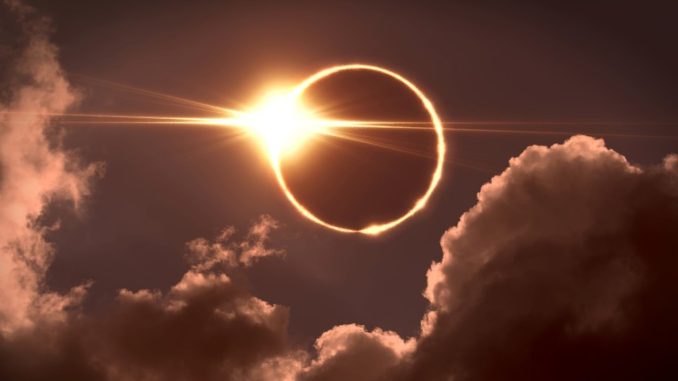
A rare solar eclipse will sweep across parts of Russia and Europe on Wednesday, with the Moon set to completely block the Sun in some areas and obscure much of it across a wider region.
The event will be livestreamed on RT starting at 19:50 Moscow time (16:50 GMT). The broadcast will take place from the Lakhta Center in St. Petersburg, the tallest building in Russia and Europe.
Where and when can the solar eclipse be seen?
The event will be the first total solar eclipse visible from mainland Europe since 1999. Totality will pass through Greenland, Iceland, and parts of Spain, where the Moon will completely cover the Sun, briefly darkening the sky and revealing its outer atmosphere, known as the corona.
What else is happening?
Several other notable astronomical events are also taking place around the same time, including the peak of the Perseid meteor shower and a planetary alignment, although they will be best observed at different times.
Solar Eclipse Viewing Glasses © Getty Images / David Marfil
Where to watch the eclipse in Russia?
In Russia, some of the best views are expected in St. Petersburg. The Moon will begin moving across the Sun at around 20:00 Moscow time and will obscure roughly 80% of the solar disk at the peak at about 20:50. The Sun will set only minutes later, putting the eclipse low over the northwestern horizon.
Murmansk, Arkhangelsk, and Kaliningrad are also expected to see a substantial partial eclipse, while the effect will weaken sharply farther southeast. In Moscow, only a tiny portion of the Sun is expected to be covered shortly before sunset.
What will the eclipse look like in Europe?
Elsewhere in Europe, the eclipse will range from total to deep partial depending on location. It will unfold through the late afternoon and evening, with the greatest eclipse occurring at around 17:46 GMT. Britain is expected to see most of the Sun obscured, with the anticipated drop in solar generation even prompting the country’s largest household energy supplier, Octopus Energy, to ask customers to reduce electricity use during the evening peak.
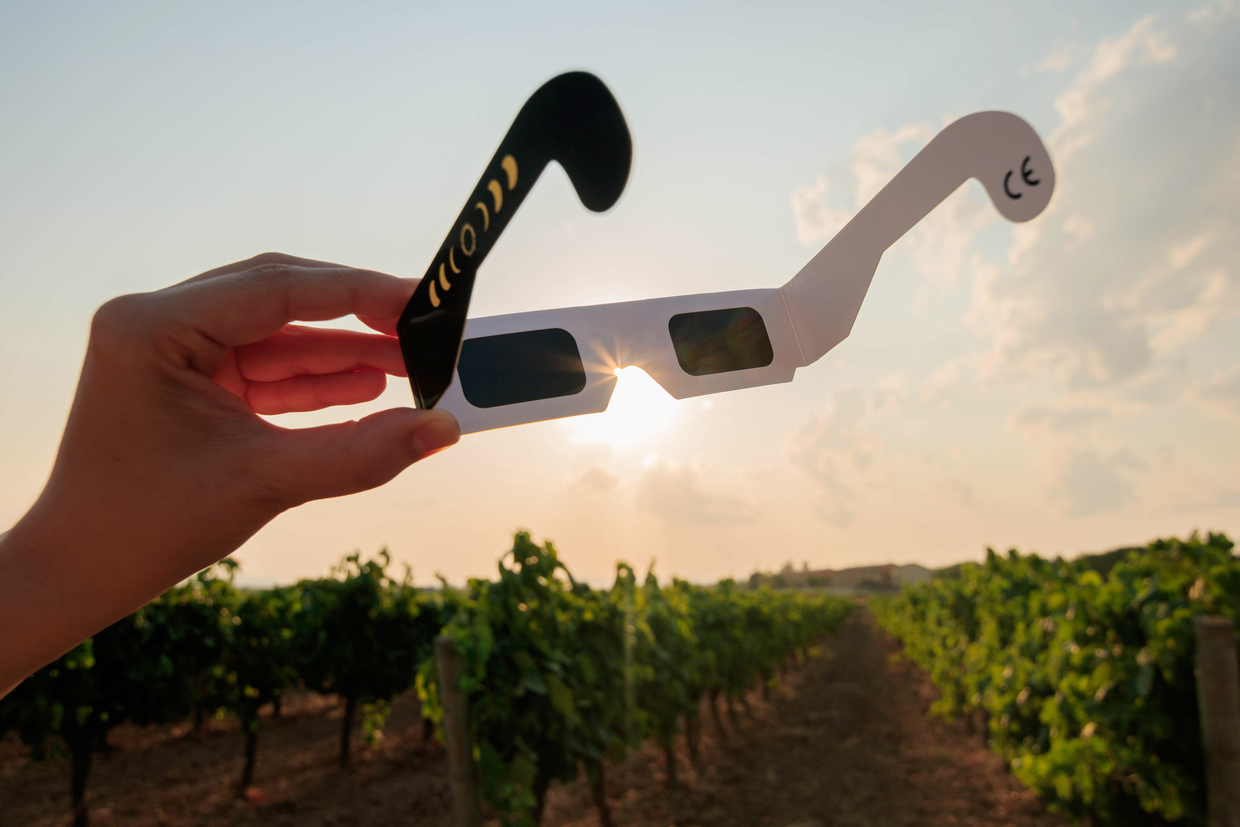
Wear special glasses to see it in person
Experts warn that the Sun should not be viewed with the naked eye or through binoculars, telescopes, or other optics without proper protection, as even very dark sunglasses cannot prevent retinal damage.
Viewers are advised to use dedicated eclipse glasses and solar filters, or use smoked glass, a welding mask, or old floppy disks or CDs. Optical instruments should only be used with filters designed specifically for solar observation. Smartphone cameras also require protection, as photographing the Sun directly can damage the sensor.












Be the first to comment