
Article By Kate Seamons
Vessels risk unleashing invasive species worldwide when they finally depart
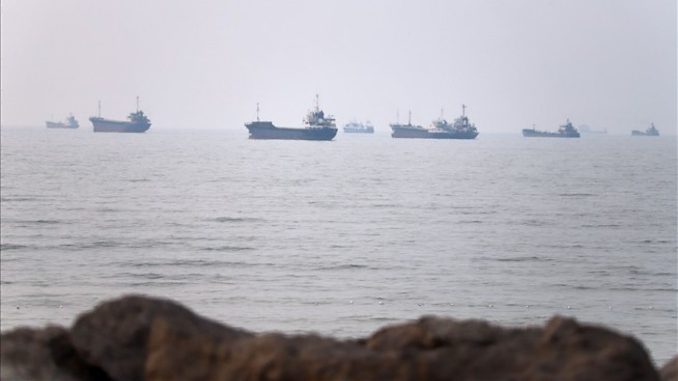
An ecological crisis could be brewing in the Strait of Hormuz, scientists say. More than 1,500 commercial ships stalled for months in and around the closed strait due to the Iran war could turn into a potential biological “superspreader” fleet, per a new study in Biological Invasions.
As LiveScience reports, cargo ships traditionally sit at port for a day or two; these ships have been stationary much longer, and after about 10 days of inactivity, marine organisms—”microbes, algae, seaweed, barnacles, and other invertebrates,” per Live Science—begin to coat their hulls. Once traffic resumes, those hitchhikers could be ferried to ports around the globe. Key lines from the study:
- “Given the unprecedented scale and duration of this mass lay-up of ships, conditions are primed for a large-scale, marine bioinvasion ‘super-spreader’ event as regular maritime trade in the region resumes. The combination of extensive biofouling growth and species accumulation, and the sheer number, size, and global reach of affected vessels, has created an immense international biosecurity threat.”
The international team of 24 marine researchers behind the study recommends in-water hull cleaning before departure but acknowledges “this scenario is unlikely for most vessels given the urgency of evacuating stranded seafarers and restoring shipping movements,” and due to limited regional capacity.
That will shift the onus to subsequent ports of call. The team recommends estimating vessel biofouling before departure, forecasting vessel routes and initial ports of call, and implementing early detection and rapid response at high-risk ports. In a press release, Woods Hole Oceanographic Institution biologist Carolyn Tepolt notes that these species “are extremely difficult, if not impossible, to eradicate once they become established.”












Be the first to comment