
Article By David Lindfield
A new report is raising alarms over the Southern Poverty Law Center’s influence in American colleges, finding that the left-wing organization’s educational materials are being used to train future K-12 teachers in 38 states.
The report from Defending Education examined 100 colleges of education and found the SPLC’s Learning for Justice program, formerly known as Teaching Tolerance, embedded in teacher preparation programs across the country.
Defending Education said researchers also found the SPLC’s Social Justice Standards were incorporated into programs focused on “Equity, Access, and Anti-bias Education,” “Teaching for Social Justice,” “Critical Consciousness,” and “Socially Just Teachers.”
The watchdog group said the materials appeared in required education courses, teacher candidate handbooks, student teacher evaluations, lesson planning assignments, departmental frameworks, and professional development programs for educators.
“It is quite clear that the SPLC’s programming has more than a trivial impact on education,” Defending Education Director of Research Rhyen Staley said.
“Pre-service teachers should not be forced to adhere to or promote politically charged ideologies to obtain a degree.
“Furthermore, students and their families deserve an educational experience that is free of political bias and promotes balanced viewpoints.”
SPLC Materials Embedded in Teacher Training
The report argues that colleges of education play a major role in shaping what future teachers bring into classrooms.
Defending Education said many universities do not openly disclose their use of Learning for Justice materials.
“Few COEs outwardly acknowledge their use of SPLC materials; instead, many COEs hide their usage and promotion behind faculty login pages,” the report said.
The report said colleges of education have significant influence over future K-12 classrooms because they train teachers, administrators, and current educators.
“Because COEs are the primary institutions responsible for preparing future K-12 classroom teachers, as well as the continuing education of present teachers and administrators, they play a major role in what content, materials, ‘best practices,’ and perspectives shape educators,” the report said.
The report highlights several universities where the standards have allegedly made their way into courses, pre-service programming, and classrooms indirectly.
According to Defending Education, California State University, Sacramento’s College of Education, and William & Mary’s School of Education require pre-service teachers to incorporate Social Justice Standards into coursework, lesson planning, classroom instruction, and professional evaluations.
William & Mary’s handbook states that the standards “reflect the School of Education’s philosophical approach to teaching and learning,” according to the report.
Report Flags Universities, Grants, and State Policy
Defending Education said Western Washington University evaluates student teachers on whether they integrate the standards into lesson planning.
The report said the university requires “clear links to identity and diversity anchor standards found in Learning for Justice/Teaching Tolerance Standards.”
Brandeis University says the standards guide its “Teaching for Social Justice” teacher education program, according to the report.
The SPLC standards have also reached graduate programs, taxpayer-funded initiatives, and state policy, the watchdog found.
The University of Maryland College of Education incorporates the standards into one of its teacher leadership master’s degree programs, according to the report.
The Maryland State Department of Education also includes them in new teacher induction regulations, Defending Education said.
“MSDE does not generally develop curriculum; we establish statewide standards,” a Maryland State Department of Education spokesperson said in a statement.
“We’re not aware of any local school systems incorporating SPLC materials into training for teachers or board members, so questions about local implementation would need to be directed to individual LEAs.”
Taxpayer-Funded Programs Draw Scrutiny
The report also reviewed taxpayer-funded initiatives tied to the standards.
Those include a $275,000 National Science Foundation grant supporting a Northern Arizona University project.
Defending Education also pointed to a $3.3 million U.S. Department of Education grant awarded to Claremont Graduate University.
The grant proposal said it would “introduce Fellows to the following core social justice teaching ideas and practices,” including the “Social Justice Standards from Teaching Tolerance,” according to the report.
The findings raise questions about whether public money is being used to advance politically charged ideology through teacher training programs.
Defending Education said the concern is not merely that SPLC materials exist, but that future teachers may be expected to adopt and apply them as part of their professional preparation.
That means the ideology can reach K-12 classrooms through teacher training, lesson planning, evaluation standards, and professional development before parents ever see it directly.
SPLC Faces Federal Scrutiny
The report comes as the SPLC faces growing scrutiny in Washington.
The Justice Department filed an 11-count indictment against the organization in April.
The indictment alleges the SPLC defrauded donors by concealing millions of dollars in payments to confidential informants operating inside extremist groups, including the Ku Klux Klan, United Klans of America, and Aryan Nations.
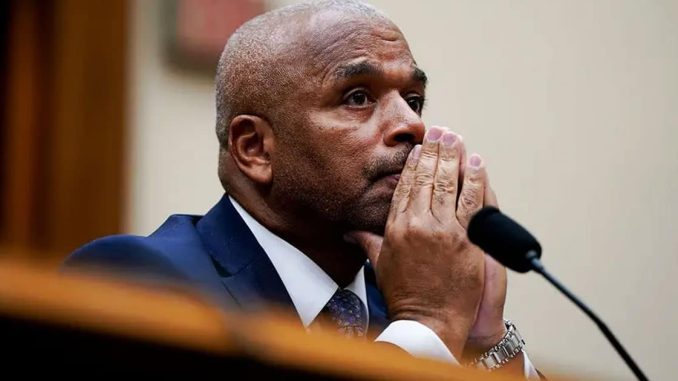
SPLC Interim President and CEO Bryan Fair denied wrongdoing during a House Judiciary Committee hearing in June.
Fair called the charges politically motivated as Republicans continue investigating the nonprofit’s ties to the Biden administration.
The SPLC has long positioned itself as an authority on extremism.
But critics argue the organization has increasingly used that label against mainstream conservative groups and ideological opponents.
Defending Education, the watchdog behind the new report, was previously labeled an “extremist” group by the SPLC.
Now that same watchdog says the SPLC’s materials are quietly shaping teacher preparation across much of the country.
The report gives parents, lawmakers, and education officials a new reason to ask what future teachers are being taught before they enter the classroom.












Be the first to comment